By Vanessa Salvia
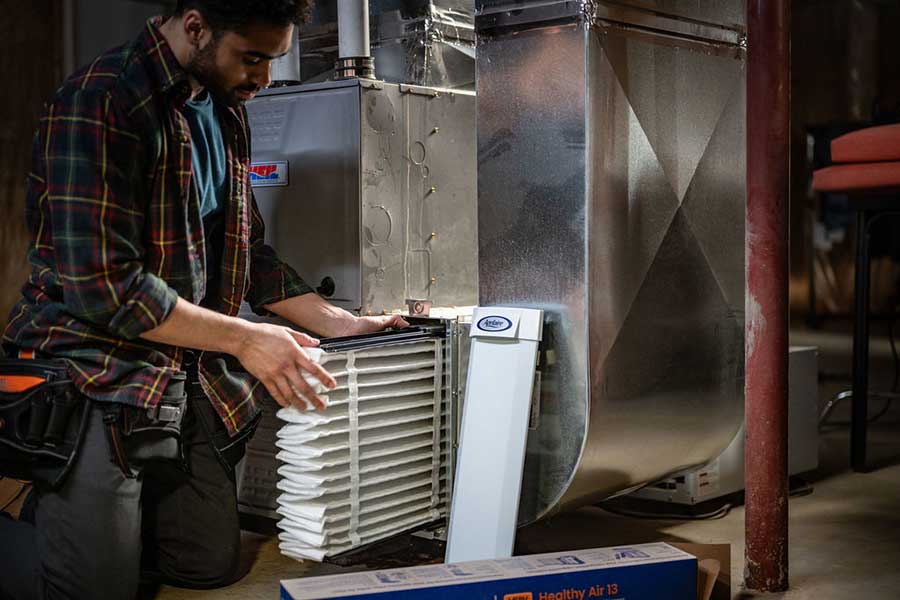
Photo courtesy of AprilAire
Why a healthy home depends on more than the air you can see
Most homeowners have heard of indoor air quality. Fewer have heard of indoor environmental quality. That’s IEQ, and it’s a broader term that describes everything that shapes how healthy, comfortable, and durable a home actually is. And according to the Environmental Protection Agency, it deserves more attention than it gets. Americans spend roughly 90% of their time indoors, where concentrations of some pollutants are often two to five times higher than they are outside (Source: https://www.epa.gov/report-environment/indoor-air-quality).
“There are five pillars or parameters that make up indoor environmental quality,” says Erika Lacroix, president of EZ Breathe Ventilation Systems. “The first one is indoor air quality. That’s the one we’re most familiar with. Moisture control is the second. Ventilation, which is where EZ Breathe does its work. Thermal comfort, which is more than just the temperature. And then lighting and acoustics, which is probably the one that’s least discussed.”
Nikki Krueger, senior marketing manager for AprilAire and Santa Fe Dehumidifiers in Madison, Wisconsin,, focuses on what happens when the air outside stops being what we call “fresh” air, and how a home’s ventilation and filtration need to respond when that happens.
Taken together, those five pillars describe the environment a house creates for the people living in it. And in Lacroix’s experience, four of the five trace back to a part of the house most people don’t, and would rather not, think about.
What Happens Below the First Floor
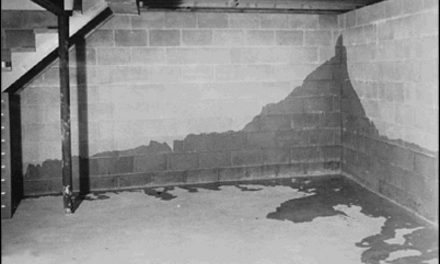
Damp, cold air in a basement or crawl space doesn’t stay in the crawlspace. Through what building scientists call the stack effect, air from the lowest level of a home rises into the living space above it. This means the conditions down there become the conditions everywhere else.
“Sixty percent of that air ends up upstairs,” Lacroix says. “One thing we often hear and is one of the first things we talk about is, ‘why should I care about this?’ Well, the basement matters, and the crawl space matters, because they have a significant effect on the rest of the house.”
A basement that stays damp feeds humidity into the whole home. A crawl space without a proper vapor barrier does the same. The EPA’s February 2026 mold guidance states clearly that indoor relative humidity should stay below 60%, and ideally between 30% and 50%, to keep mold, dust mites, and other biological contaminants in check. (Source: https://www.epa.gov/mold/brief-guide-mold-moisture-and-your-home)
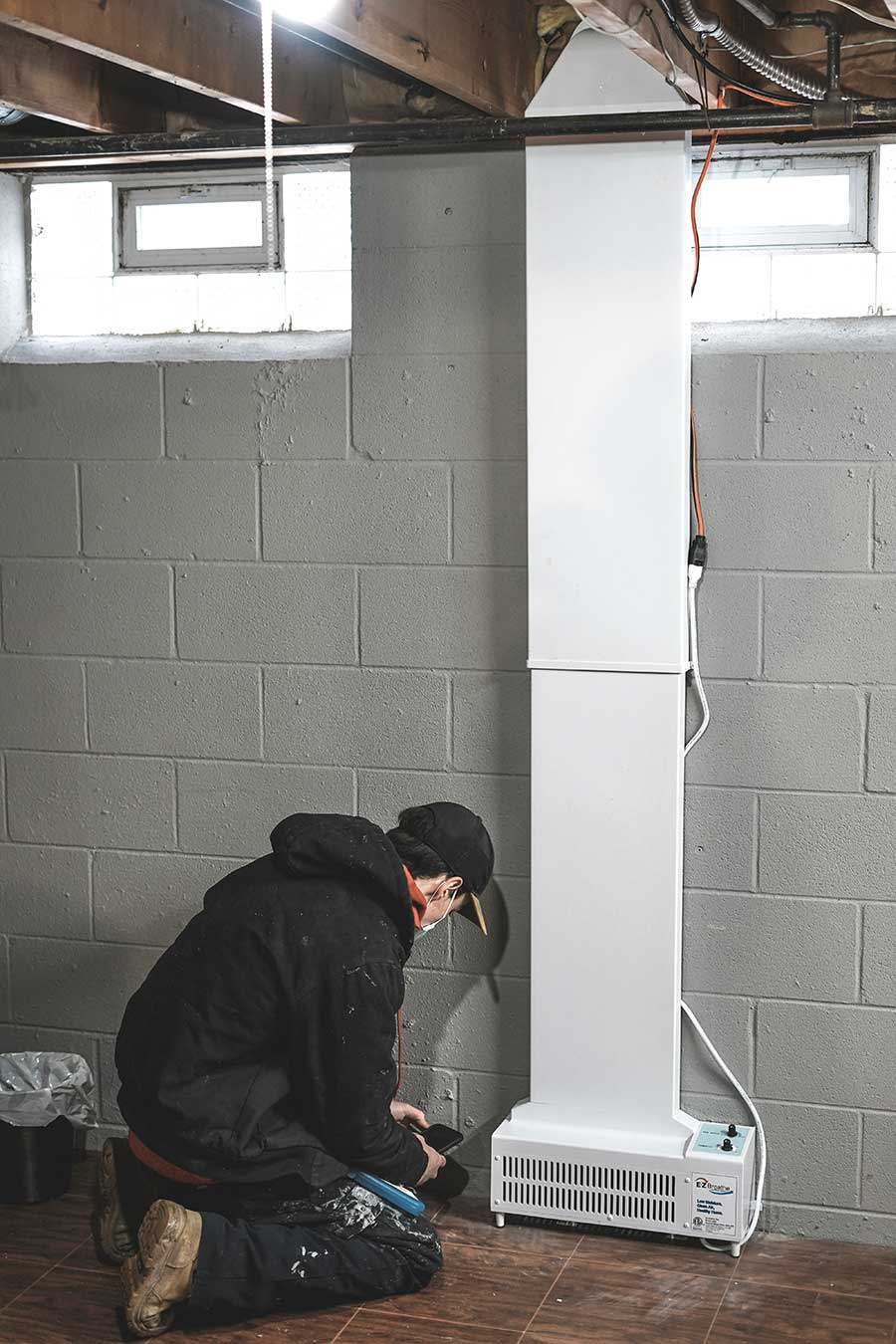
EZ Breathe units work to ventilate basement air so that the air that moves into the rest of the home is healthy. Photo courtesy of EZ Breathe
Where a Dollar Goes Furthest
Homeowners often ask Lacroix where or how they should fix the air quality inside their homes. She’s given them the same answer for 20 years.
“The most cost-effective way to ensure you’re providing a good, healthy indoor environment is improving your ventilation rates,” she says. “Air exchanges — solution by dilution. That’s what all the industrial hygienists say.”
The EPA agrees. The agency identifies inadequate ventilation as a primary driver of indoor air quality problems, because too little outdoor air means indoor pollutants aren’t diluted or carried out of the home. The EPA’s report called “The Inside Story: A Guide to Indoor Air Quality,” says “Indoor pollution sources that release gases or particles into the air are the primary cause of indoor air quality problems in homes. Inadequate ventilation can increase indoor pollutant levels by not bringing in enough outdoor air to dilute emissions from indoor sources and by not carrying indoor air pollutants out of the home. High temperature and humidity levels can also increase concentrations of some pollutants.”
For residential buildings, the EPA points to ASHRAE Standard 62.2, which calls for a minimum of 0.35 air changes per hour — roughly eight complete air exchanges per day — and no less than 15 cubic feet of air per minute per person. (Source: https://www.epa.gov/indoor-air-quality-iaq/how-much-ventilation-do-i-need-my-home-improve-indoor-air-quality)
Lacroix points out that means moving air out of the house, not just around inside it. “You need some way of ventilating that air out, so the air handler can replace it with cleaner, drier air, instead of just a closed-loop system recirculating the same air,” she says.
Recirculating through an HVAC filter is part of the solution, but it can’t substitute for genuine exchange with outdoor air. Compared with purification systems that carry purchase, maintenance, and replacement costs, she says, “the biggest improvement per dollar spent comes from increasing the air exchanges.”
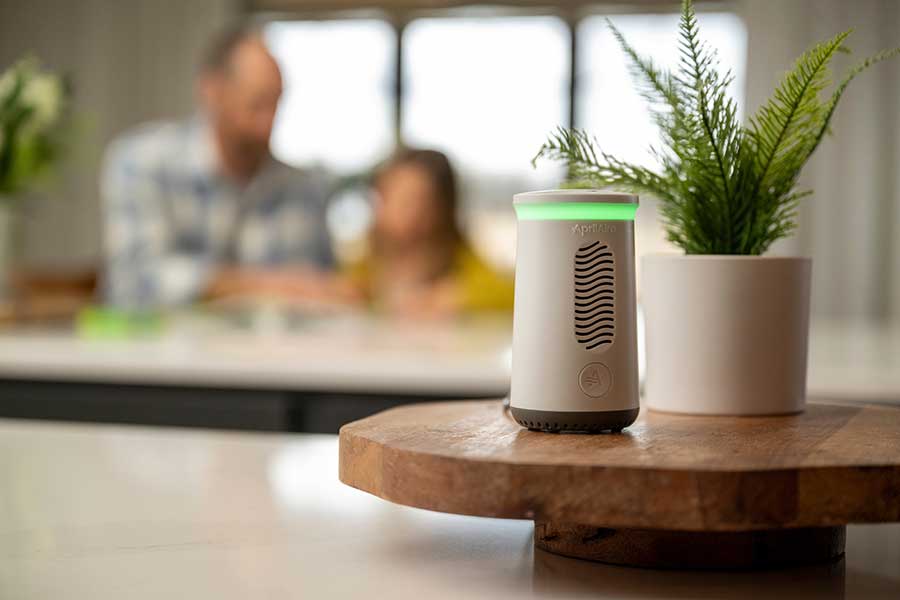
AprilAire Air monitors and sensors are part of the AprilAire Healthy Air System which addresses all aspects of Indoor Air Quality in the home. Photo courtesy of AprilAire
Maintenance Habits
Air exchange only works if the home isn’t actively generating its own problems. That’s where basic maintenance comes in. These are the needed but easy to avoid tasks that homeowners often skip.
“Air exchange is great, but if you’ve got a leaky pipe, or you vent your dryer into the attic, no amount of air exchange is going to prevent that condensation,” Lacroix says.
A leaky pipe delivers a slow, continuous supply of moisture to the places ventilation can’t reach — inside wall cavities, under cabinets, behind fixtures. The EPA’s mold guidance notes that wet materials dried within 24 to 48 hours will, in most cases, not grow mold. A leak that drips for weeks, though, feeds mold growth and wood decay long before a stain on the wall or any other tip-off is noticeable. (Source: https://www.epa.gov/mold/brief-guide-mold-moisture-and-your-home)
The dryer venting to the wrong place happens a lot, and it’s often just because homeowners don’t understand how condensation works. Every load of laundry sends warm and humid air filled with lint through that duct. When vented into an attic or garage instead of outdoors, all of that water vapor condenses inside the building envelope. In an unfinished attic that means it is soaking insulation, wetting framing and roof sheathing, and creating ideal conditions for mold and rot in a space nobody looks at. The lint makes things worse because it’s highly flammable. The 2022 report by the U.S. Department of Energy’s Building America Solution Center says that accumulated lint in ductwork is a recognized fire hazard. (https://basc.pnnl.gov/resource-guides/proper-clothes-dryer-venting)
This is why the International Residential Code Section M1502 requires dryer exhaust to t erminate outside the building, and model codes explicitly prohibit exhausting into an attic, soffit, or crawl space. (Source: https://codes.iccsafe.org/content/IRC2021P1/chapter-15-exhaust-systems)
Cutting back on indoor pollution sources such as air fresheners and harsh cleaning products helps keep IEQ in good levels. Also simply keeping the house clean — vacuuming up dust and dander before concentrations build — helps too. So does replacing the HVAC filter. The guidance on the package typically says every 90 days, but Lacroix suspects most people may change it twice a year, if that.
Energy Star advises checking the filter every month during heavy-use seasons and replacing it at least every three months, because a dirty filter slows airflow, forces the system to work harder, and lets dust and dirt accumulate in the equipment itself, inviting expensive repairs or early system failure. (Source: https://www.energystar.gov/saveathome/heating-cooling)
“These are common-sense things,” Lacroix says, “but often are often not prioritized. Homeowners tell us, ‘Oh yeah, I should have probably changed that HVAC filter. I think we did it last summer,’ when it was really two summers ago.”
When Nobody’s Home
One scenario Lacroix singles out is what happens when homeowners leave for vacation. Homeowners leave for two weeks, switch off the air conditioning to save money, and return to a moldy house.
“It’s not just about temperature and your comfort when you’re there,” she says. “You have to treat the home and protect it from itself. Mold isn’t going to grow only when you’re home.”
This is especially important for second-home owners and frequent travelers, whose houses may sit closed up for weeks at a time. Her recommendation of maintaining 30% to 50% indoor humidity year-round, occupied or not, matches the EPA’s guidance.
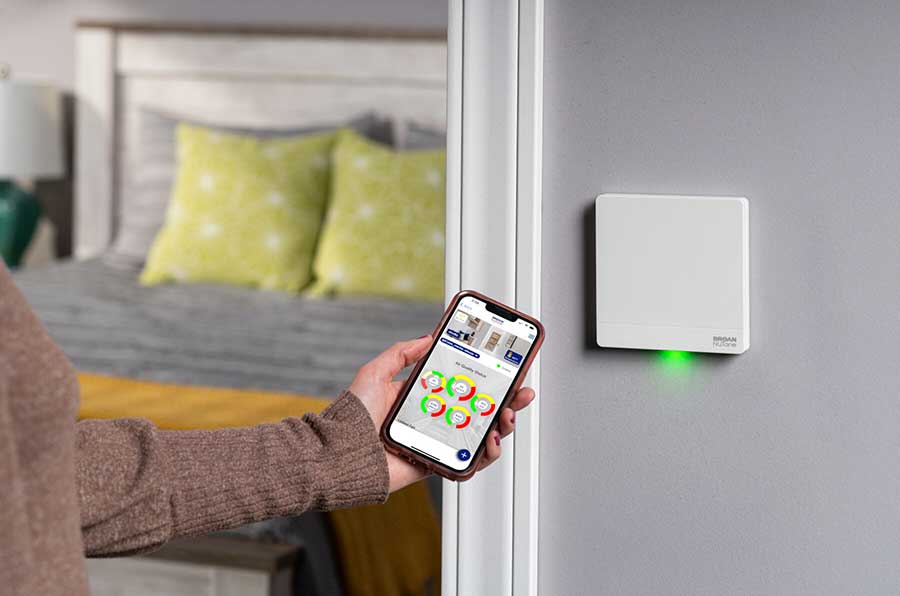
The Overture IAQ System can track outdoor conditions and automatically shut off a home’s ventilation system when air quality drops outside. Photo courtesy of AprilAire
When the Outdoor Air Turns Against You
The usual logic of ventilation assumes outdoor air is the clean supply. During wildfire season, that assumption is no longer true. The EPA advises against ventilating with outdoor air when outdoor pollution is high. (Source: https://www.epa.gov/indoor-air-quality-iaq/ventilation-and-respiratory-viruses)
This isn’t just a problem for fire-prone regions. Smoke can travel hundreds of miles from its source, so homes far from any active wildfire can still be affected. There’s no easy fix for smoke events beyond keeping doors and windows closed and limiting outdoor exposure. But there are ways to reduce the impact, starting with how a home’s ventilation system responds.
Krueger says the problem is that people assume outdoor air is automatically the cleaner option. Many people describe opening a window as “letting in fresh air.” Experts don’t call it that; they call it mechanical ventilation, because outside air isn’t always better.
“There’s a lot of places in the country where the outdoor air isn’t fresh air,” she says. That’s why smart ventilation control can be important. Sensor-based indoor air quality monitors like the AprilAire Healthy Air Monitor (when integrated with other AprilAire products) and the Overture IAQ System can track outdoor conditions and automatically shut off a home’s ventilation system when air quality drops outside. They can also activate the fan on the HVAC in order to move air through an air purifier attached to the system based on air particle readings in the home.
Filtration matters too, especially during smoke events. Krueger recommends a MERV 13 filter or higher, since wildfire smoke’s smallest particles, at the scale called PM2.5, are small enough to enter the bloodstream. Even with ventilation shut off, some of that particulate still finds its way inside through doors, gaps, and everyday traffic in and out of the house — which is why good filtration on the HVAC system remains essential regardless.
Why It All Matters
Indoor environmental quality is ultimately about more than comfort. “The top three priorities in IEQ should always be ventilation, filtration, and humidity control,” Krueger says.
“The whole goal is to create a healthy home — comfortable, safe, durable, so your home is going to have longevity,” Lacroix says. “Why shouldn’t people care about their indoor environmental quality?”
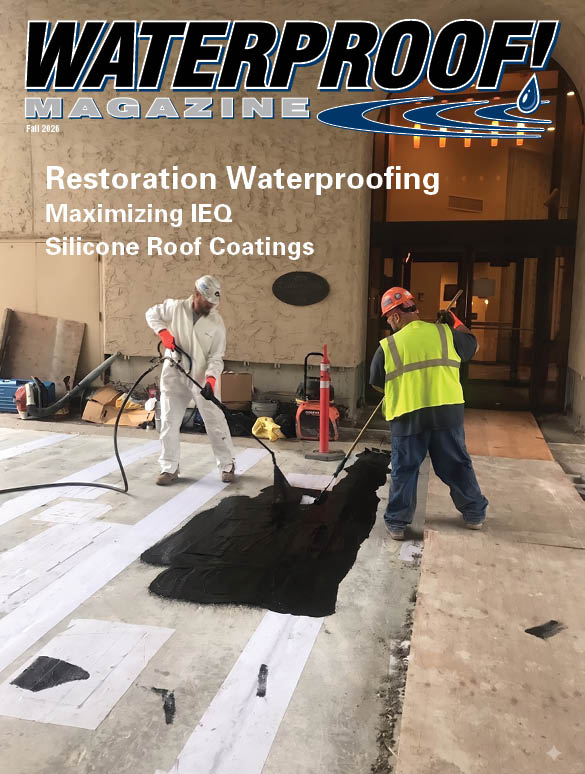
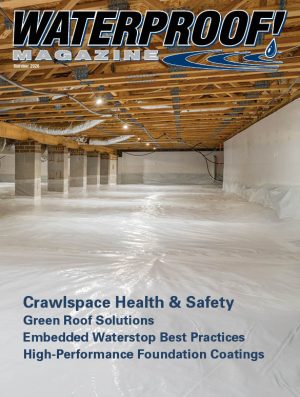
Fall 2026 Back Issue
Price range: $4.95 through $5.95
Managing the Roof as a Building Asset
What Contractors Need to Know Before Taking on Restoration Waterproofing
The Monolithic Defense: Why Silicone is the Strategic Play for High-Stakes Assets
Indoor Environmental Quality Starts From the Ground Up
Description
Description
Managing the Roof as a Building Asset
By Vanessa Salvia
Many owners can’t say what kind of roof their building has. Even if they do know, the attitude often amounts to: We’ll deal with it when it leaks.
What Contractors Need to Know Before Taking on Restoration Waterproofing
By Vanessa Salvia
New-construction waterproofing gives contractors a known substrate. This is something restoration work almost never offers.
The Monolithic Defense: Why Silicone is the Strategic Play for High-Stakes Assets
By Errol Bull, P.E., CSI
Shifting from traditional “seamed” systems to a monolithic silicone roof coating strategy can transform the building envelope from a depreciating liability into a durable, high-performing investment.
Indoor Environmental Quality Starts From the Ground Up
By Vanessa Salvia
IEQ is a broad term that describes everything that shapes how healthy, comfortable, and durable a home actually is. And according to the EPA, it deserves more attention than it gets.
Additional Info
Additional information
| Weight | N/A |
|---|---|
| Magazine Format | Digital Download Magazine, Print Mailed Magazine |