By Vanessa Salvia
Photo courtesy of Polyglass
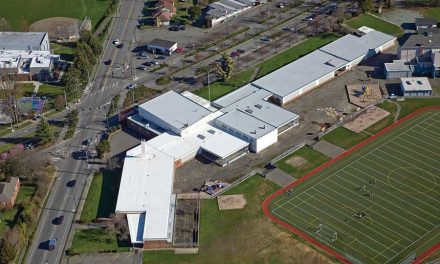
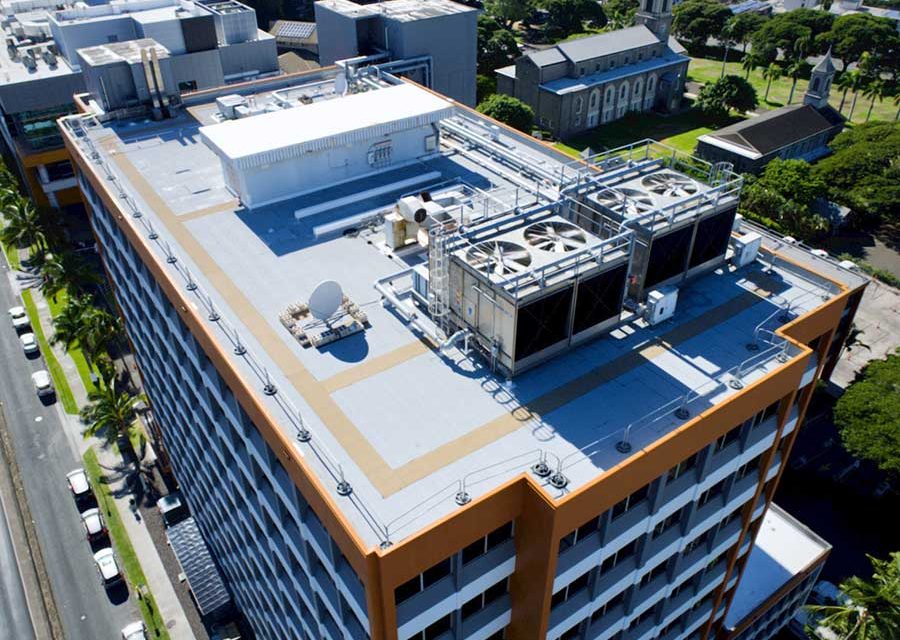
An aerial view of the roof on the Kapi’olani Medical Center for Women & Children in Honolulu, Hawaii. The existing roof system was removed and replaced with a new Polyglass-modified bitumen system installed around the existing penetrations and equipment.
Ask a building owner about their HVAC maintenance schedule and they can usually produce one. Ask about the roof, and … there’s usually a lot less information forthcoming. Many owners may not have detailed information about the roof system on their building. Even if they do know, the approach often amounts to: We’ll deal with it when it leaks.
“The roof is probably the biggest asset you have on the building,” says Henry Rives, national membranes technical services manager for Polyglass. “It needs to be maintained just as they would any other equipment that’s part of the building. Unfortunately, it’s often not looked at until there’s a problem.”
Roof asset management is essentially about giving the roof the same scheduled attention owners give to an HVAC unit or an elevator. Roofs need regular inspections, planned maintenance, and documentation of maintenance just like other building assets.
Liang Gwee PhD, the commercial roofing expert at Saint-Gobain GCP, makes the comparison directly, treating a roof like any other building system with a life cycle to manage.
“Asset management is asset management,” says Gwee. “You first make an assessment when you install it, making sure it’s installed well. You inspect it at that time, and over its life you conduct regular maintenance.
All things age, including roofs. But a roof that has been consistently maintained, with that maintenance documented, may be a candidate for restoration rather than replacement. This extends its service life even more at a fraction of the cost of a tear-off.
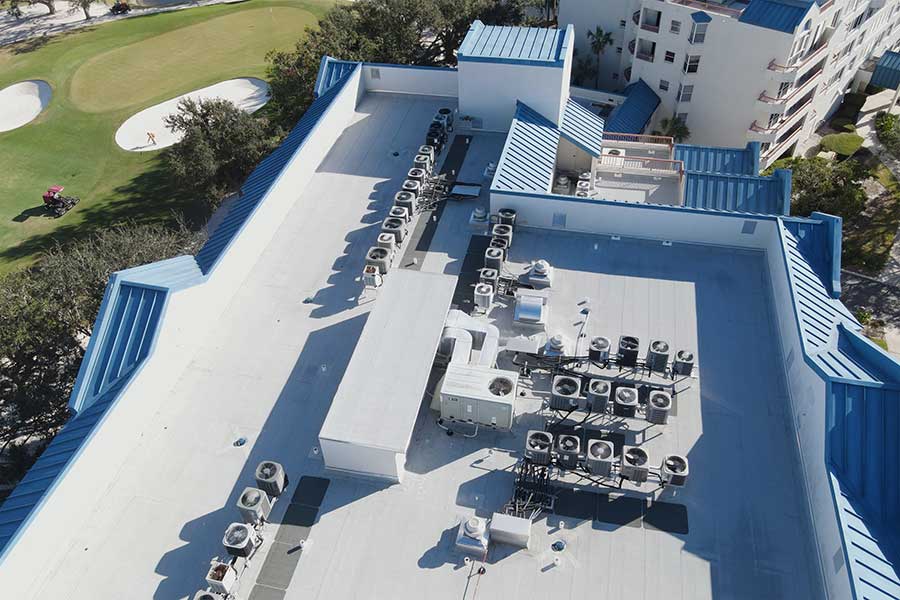
Aerial walk pads on a commercial roof provide protection to areas that need to be accessed for maintenance. Photos courtesy of Polyglass
The Most Expensive Strategy Is No Strategy
Both Rives and Gwee identify the same fundamental mistake that most building owners make, although they frame it differently. For Rives, one of the most common challenges Rivas sees in roof asset management is deferred maintenance. For Gwee, it’s the absence of a plan.
“Oftentimes the call comes when there’s a leak, and taking action only when there is a leak is not really a good plan,” Gwee says. “By the time you see a leak, that’s usually pretty severe. If you catch the problem early on, the resolution could be minor. But once water finds its way into the roofing assembly, it has the opportunity to go through cycles of seasons, rot, and that’s where the real damage comes in.”
In other words, when the workers in the building report a leak, the membrane may have been compromised for months or years before the water is visible indoors. Often, the leak has been there long enough for saturated insulation and deteriorated decking to turn a repair into a replacement.
Where Roofs Actually Fail
Waterproofing professionals know that the trouble doesn’t start with the roof itself, but with the details.
“The challenges would generally have to do with the fine details,” Gwee said. “If you’ve ever painted a room, painting the wall doesn’t take a lot of time, it’s the cutting in that takes time. That detail work takes time, and because it takes time, there’s potential for some contractors under time pressure to want to go faster.”
That’s why both experts emphasize working only with accredited installers. Gwee points to the rigorous certification program CertainTeed contractors complete, while Rives notes that Polyglass warranties can be jeopardized when repairs are performed by contractors outside the manufacturer’s registered program who aren’t trained in its methods.
An emphasis on craftsmanship is also what Rives looks for during an annual professional inspection. “The focus would be the details — the penetrations, the rooftop units — not so much the membrane in the field,” he says.
“You’re not going to have problems there unless you have open laps, which are fairly easy to notice. It’s the details where you’re going to have problems.”
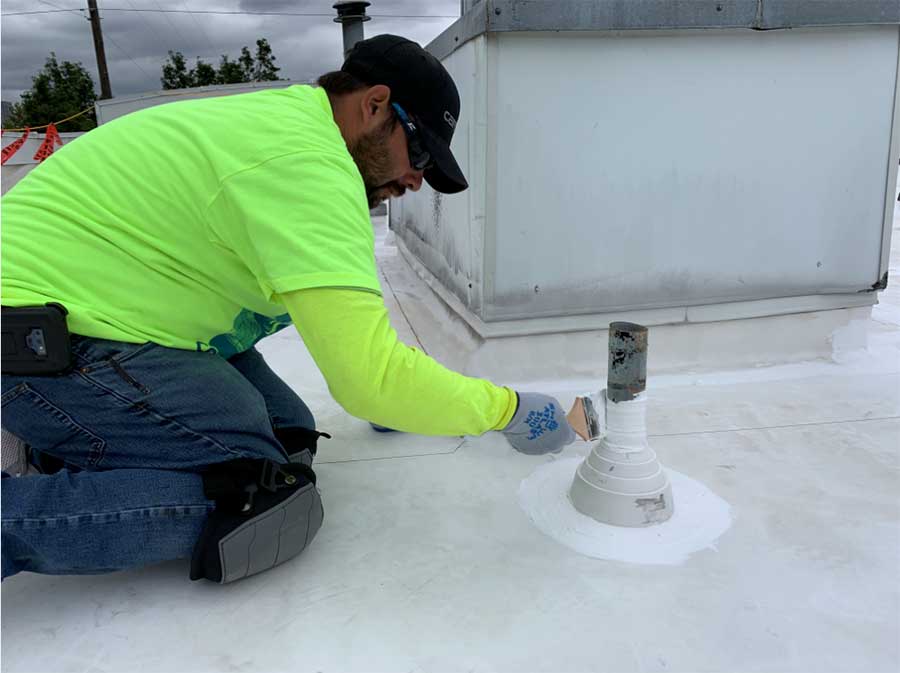
A contractor applies coating around a pipe penetration on a commercial roof. Lack of attention to this kind of detail work is one of the most common sources of roof failures. Photo courtesy of GCP
Developing A Maintenance Program
“Water flowing off the roof is the most important thing,” Rives says. “Stagnant water is going to create issues. As long as the water is draining correctly and properly, that’s the first step in making sure you get the full service life of the roof.”
Some ponding after rain is expected, and that’s fine. The industry standard allows 48 hours after a significant rain event for water to dissipate. “If it dries up before then, there really shouldn’t be an issue,” Rives says. “You may see some staining, but it’s acceptable for the most part.” Water still standing days later is aging the membrane in those areas and needs attention.
Beyond drainage, Rives’s routine checklist for in-house staff includes penetrations, perimeter sealants, and physical damage. You can call it “the three Ps.” Pourable sealer applied around penetrations from pitch pans can shrink and pull back over time, creating an entry point for water. Penetrations should be topped off and level, not sunken and collecting water.
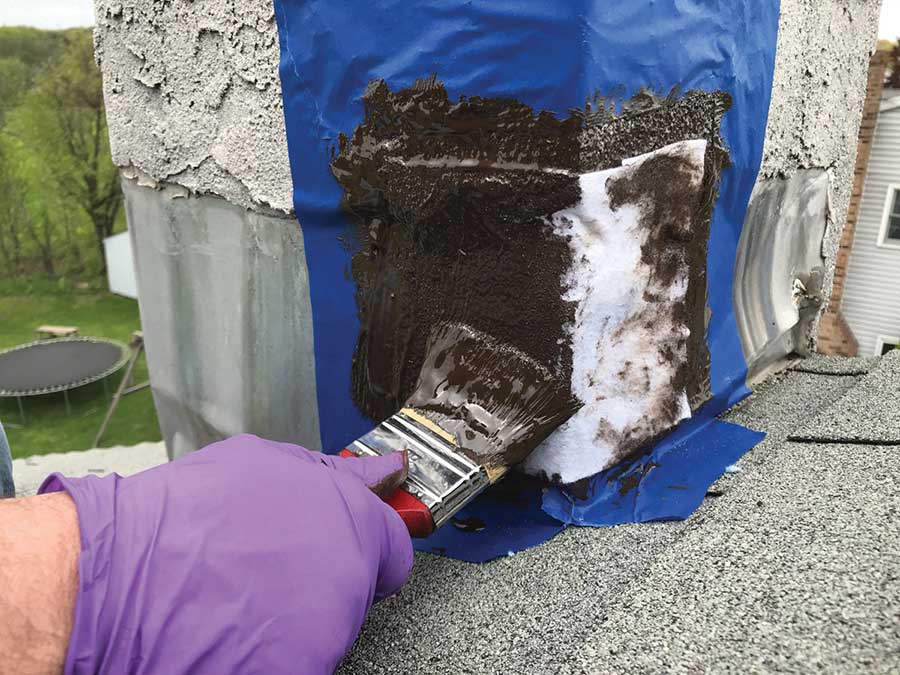
Liquid flashing is brushed over reinforcing fabric at the base of a chimney. This is a notoriously leak-prone transition point. Photo courtesy of GCP
Perimeter sealants at walls and stucco stops dry out. The sealant needs periodic refreshing, no matter whether the existing sealant is neoprene, silicone, or another chemistry, so the replacement is compatible. Always check for physical damage.
Single-ply membranes are especially vulnerable to punctures from dropped screws and tools around rooftop units. High-traffic routes to roof hatches and equipment should have walk pads to reduce the impact on the materials.
Gwee adds that severe weather should trigger inspections even if you just inspected it and you’re not due for another inspection. After a recent microburst tore through Philadelphia, his first move was to get on his own roof deck and clear the drains. “When your gutters or drains get clogged, you start to have ponding water, and the roof doesn’t like that.”
Rives suggests monthly walks by in-house staff, plus a thorough annual inspection by a qualified, certified contractor. Gwee is reluctant to give a universal time frame. So much depends, he says, on the roof and the climate. A roof in Philadelphia, a roof in Washington, and a roof in the California high desert are in completely different environments, but he agrees the essential thing is that the timing of inspections is planned and followed.
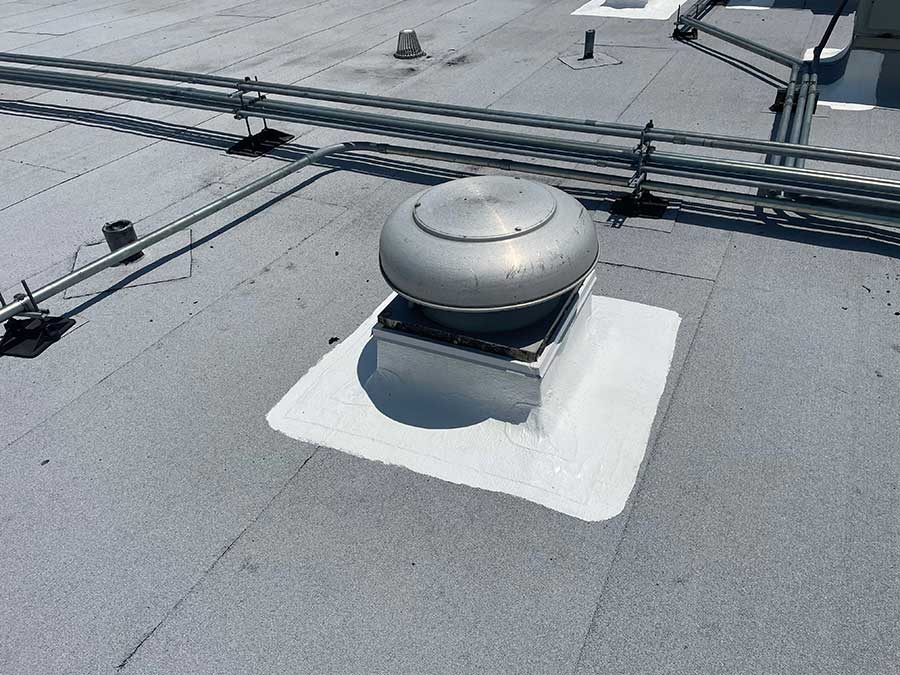
Detail around a roof penetration. Photo courtesy of Polyglass
Early Warnings
A roof usually shows signs of trouble well before you see signs of it indoors. Rives looks for material curling along laps, sagging, cracked sealants at penetrations, and signs of wear along traffic paths. Gwee adds that he looks for cracking that’s beginning to show and granule loss beyond what the roof’s age would predict.
Granule loss refers to the small mineral granules embedded in asphalt-based roofing materials (like modified bitumen or asphalt shingles) wearing away or shedding from the surface. Those granules protect the underlying asphalt from UV degradation, so as they wear off, what shows is bare asphalt, and that ages, cracks, and breaks down faster.
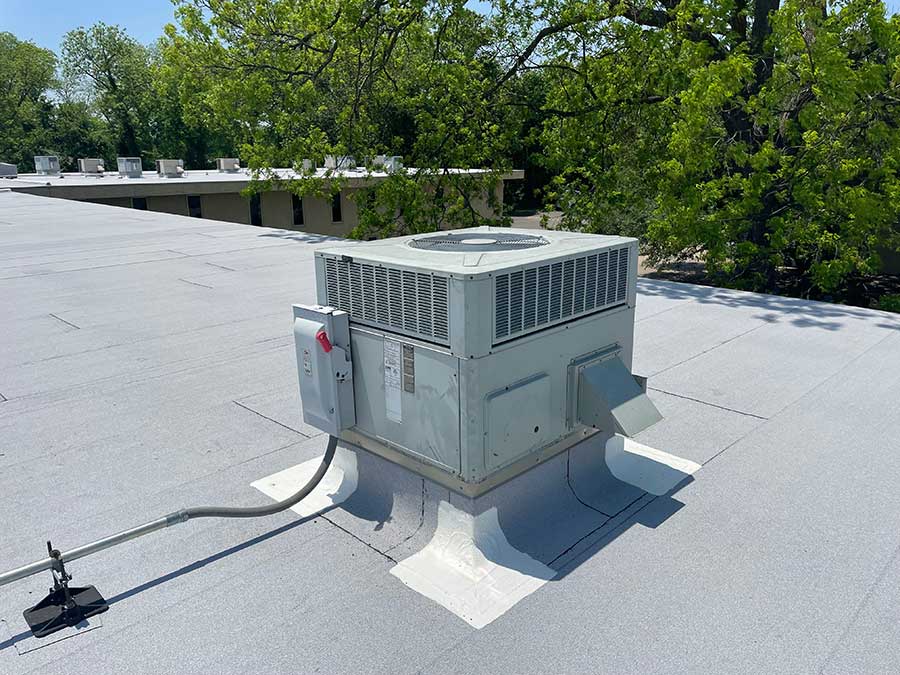
Detailing around an HVAC roof curb. Photo courtesy of Polyglass
The catch is that it takes a skilled roofing professional to know what to look for, which is why Gwee argues that it’s important to use a reputable local contractor rather than in-house staff.
The same is true of inspection technology. Infrared scanning uses heat signatures to pinpoint water trapped beneath the membranes, and drones have made large roofs easier to survey. But the tools are best used by people who are trained to use them. An IR scan done at midday and one done in the evening can show very different results. By evening the roof itself has cooled down but any wet spots underneath the membrane are still holding onto heat.
“These are tools,” Gwee says. “You need specialized training and experience to best leverage them. There’s no silver bullet. A skilled professional would understand the right tool for the situation and apply their judgment.”
Rives remembers the alternative. “Before we had these tools, you’d just walk around and step on it — if you heard a squishy sound, you’d found it.”
Protecting the Warranty
The two most common ways owners jeopardize coverage without realizing it are by neglecting maintenance and by hiring repairs out to contractors who aren’t part of the manufacturer’s registered program.
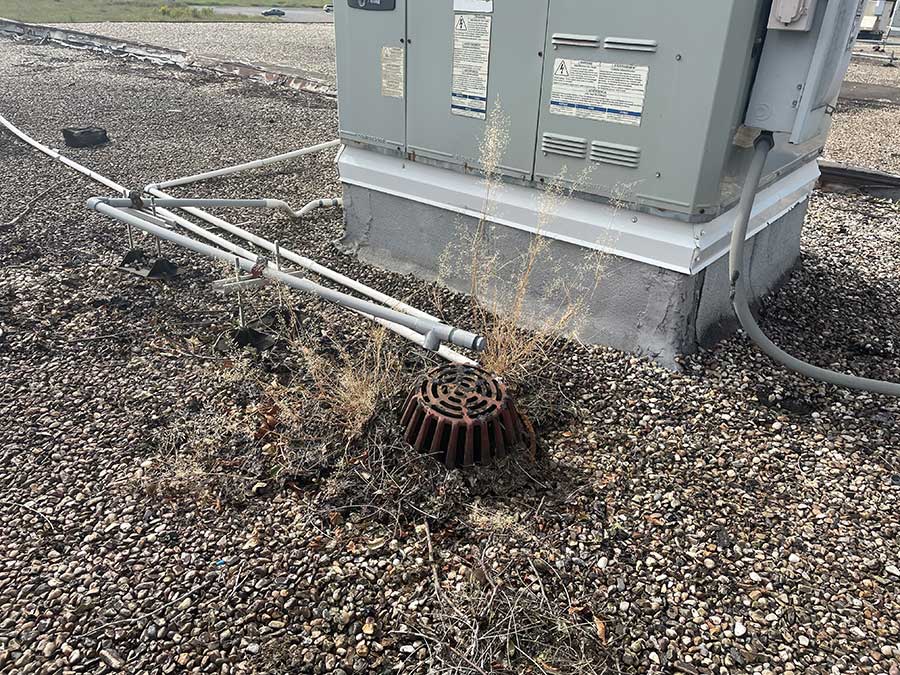
Debris around a drainage area can cause water to pool instead of draining. Photo courtesy of Polyglass
Documentation is the safeguard. Rives recommends owners contract with their roofing company for scheduled visits annually or semiannually, with a photo report from every trip. “Whether it was a minor repair or filling in a pitch pan, they need to document it, photo-document it, and explain what area of the roof it was done in,” he says. “That should be part of the maintenance plan, so you have that record and you’re in a better position if there’s a warranty claim.”
Know What’s Up There
If Rives could change one thing about how building owners approach their roofs, it would be among the more basic pieces of knowledge: Many building owners aren’t familiar with the specifics of their roof system.
Building managers often inherit years of deferred maintenance, with many areas throughout the property requiring attention. The roof is frequently one of the most neglected building components and is often in the greatest need of ongoing maintenance and upkeep, Rives says.
A single-ply membrane, a built-up roof, and a coated system each require different maintenance approaches. This makes it difficult to plan when the type of roof is a mystery.
“It’s their first line of defense, and it’s protecting every asset inside the building,” Rives says. “The roof is a vital part of the structure, and it often doesn’t receive the same attention as other critical building systems.”
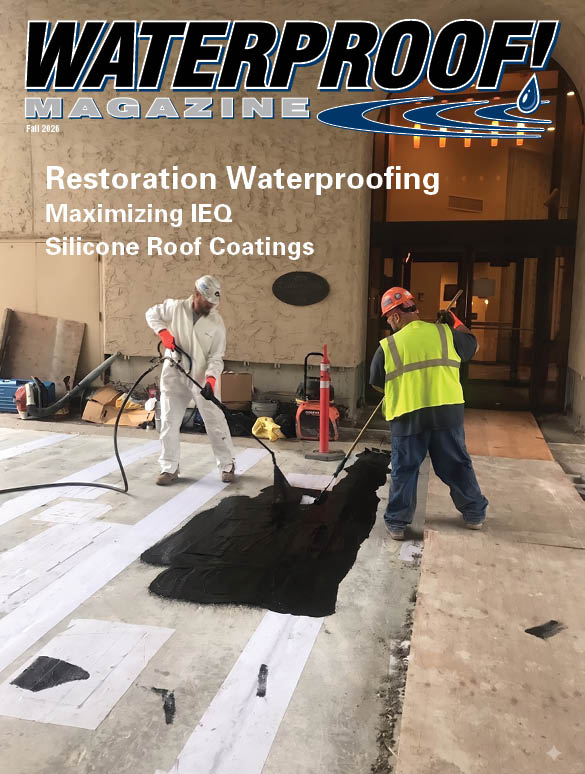
Fall 2026 Back Issue
Price range: $4.95 through $5.95
Managing the Roof as a Building Asset
What Contractors Need to Know Before Taking on Restoration Waterproofing
The Monolithic Defense: Why Silicone is the Strategic Play for High-Stakes Assets
Indoor Environmental Quality Starts From the Ground Up
Description
Description
Managing the Roof as a Building Asset
By Vanessa Salvia
Many owners can’t say what kind of roof their building has. Even if they do know, the attitude often amounts to: We’ll deal with it when it leaks.
What Contractors Need to Know Before Taking on Restoration Waterproofing
By Vanessa Salvia
New-construction waterproofing gives contractors a known substrate. This is something restoration work almost never offers.
The Monolithic Defense: Why Silicone is the Strategic Play for High-Stakes Assets
By Errol Bull, P.E., CSI
Shifting from traditional “seamed” systems to a monolithic silicone roof coating strategy can transform the building envelope from a depreciating liability into a durable, high-performing investment.
Indoor Environmental Quality Starts From the Ground Up
By Vanessa Salvia
IEQ is a broad term that describes everything that shapes how healthy, comfortable, and durable a home actually is. And according to the EPA, it deserves more attention than it gets.
Additional Info
Additional information
| Weight | N/A |
|---|---|
| Magazine Format | Digital Download Magazine, Print Mailed Magazine |