Polyurea Coatings: A Fast-Curing Solution for Waterproofing Concrete Decks
By Vanessa Salvia
Photos courtesy of Polyglass
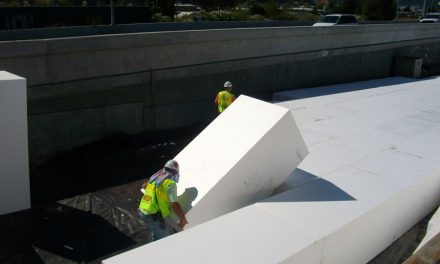
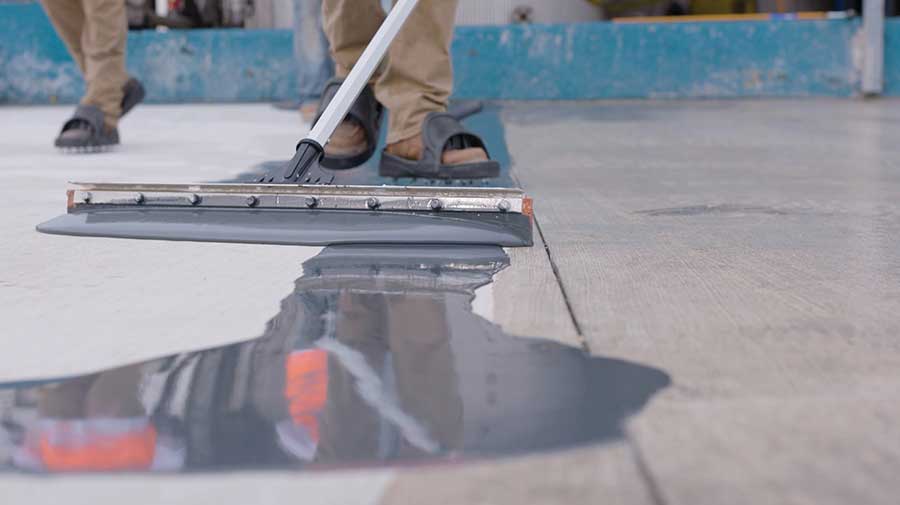
A crew primes before hand-applying Polyglass Tecnocoat.
When it comes to waterproofing concrete decks, designers and contractors are increasingly turning to polyurea coatings as an alternative to traditional sheet membranes. With their combination of seamless application, superior durability, and remarkably fast cure times, these liquid-applied systems are changing how waterproofing projects are specified and executed, whether that is for plaza decks, parking structures, or industrial containment areas.
Protection and Durability
One of the most significant advantages of polyurea over sheet membranes is the elimination of seams, according to Mark Franciosi, director of technical services at Polyglass.
“Since polyurea is a liquid-applied waterproofing, you end up with a seamless application versus a sheet, which will have seams every 3 to 4 feet, depending on the width of the membrane,” Franciosi explains.
In addition to eliminating seams, polyurea systems offer exceptional durability that sets them apart from other waterproofing technologies.
“The overall durability of polyurea really is unmatched in relation to durability,” says Franciosi. “Polyurea systems can tolerate a lot of abuse prior to overburden being placed over them, whether it’s a plaza system inclusive of a drainage mat, insulation, pavers, or a garden roof, anything that would be placed over the membrane.”
This durability is particularly valuable during the construction process, because there’s usually a period of time where the polyurea membrane is exposed to potential damage by other trades.
“The amount of abuse it can tolerate is really second to none versus any sheet membrane out there, or really any other fluid applied technology as well,” he adds.
Save Time and Money
Perhaps the most compelling advantage of polyurea coatings is their remarkably fast cure time, which translates directly to schedule and cost savings.
“One of the other really important benefits is the overall fast return to service,” Franciosi notes. “With polyurea, you have extremely quick cure times versus a lot of other technologies. Having a quick cure time saves on labor and really expedites the construction schedule overall.”
Just how fast of a return to service are we talking? “Sometimes with the spray-applied polyureas, depending on the specific formulation, you can spray and literally walk on what you sprayed seconds later,” he says.
This speed advantage becomes even more apparent when compared to other technologies, which sometimes require waiting 12, 18, or 24 hours before the membrane can be walked on and more work can continue.
In practical terms, this means an entire waterproofing system or even an exposed pedestrian or vehicular traffic system can potentially be completed in a single day. Consider applying a traffic coating, for example, which would require applying primer, waterproofing, and then a topcoat sanded with aggregate, and then another topcoat.
“Theoretically, depending on the size of the area, if you scheduled and coordinated things efficiently, you could do all that in one day, just because of the quick cure of all the different materials within the polyurea system,” he says.
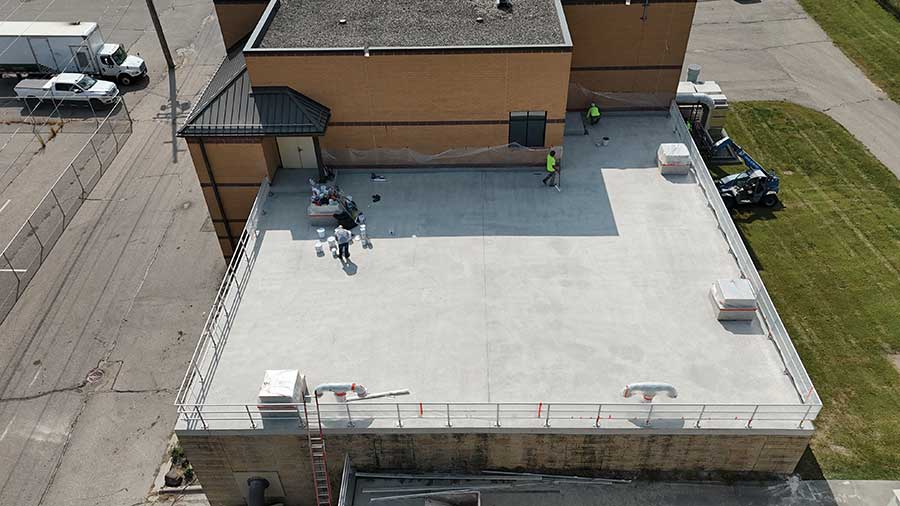
Hand-applying Polyglass Tecnocoat. Polyurea can be formulated as a spray or hand application system, and both can achieve the same result.
Cost Considerations
When it comes to pricing, polyurea systems are competitive despite sometimes higher material costs versus some competing technologies. You might pay more up front, but that higher cost can be erased once the savings on labor are factored in, and the schedule savings which the quick return to service provides.
“Generally speaking, polyurea can be a very cost-competitive system versus other technologies out there,” Franciosi says.
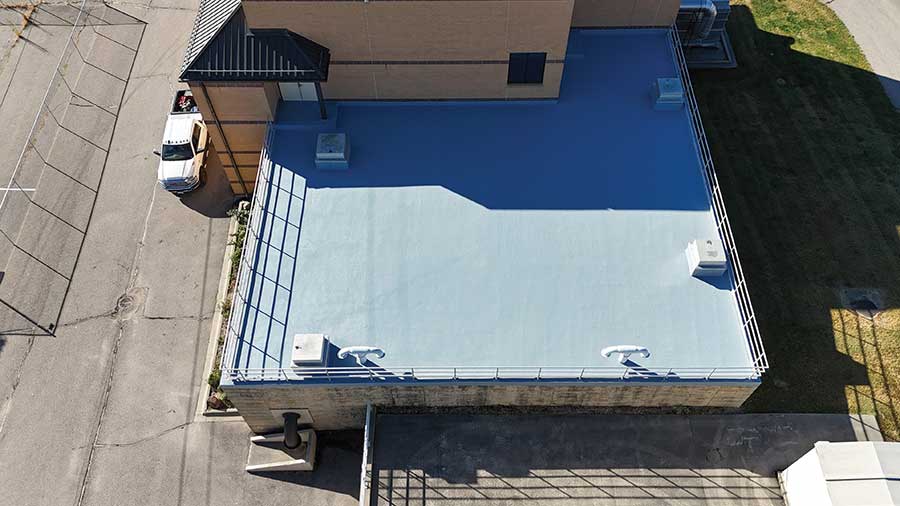
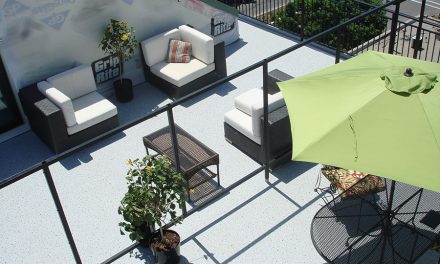
The completed hand-applied Polyglass Tecnocoat roof.
Spray vs. Hand-applied Systems
Polyurea can be formulated as a spray or hand application system, and both can achieve the same result. Typically, though, the production will be dramatically improved with a spray-applied application versus a hand-applied application.
Hand-applied systems are commonly used for smaller projects such as balconies or a smaller-sized plaza deck. That’s not to say that the hand-applied system can’t be used for larger projects as well — Franciosi says Polyglass has performed hand-applied polyurea applications for projects of 30,000 to 40,000 square feet.
The choice often comes down to contractor preference and equipment availability. Some contractors typically do a lot of hand-applied coatings, while other contractors will always opt for spray.
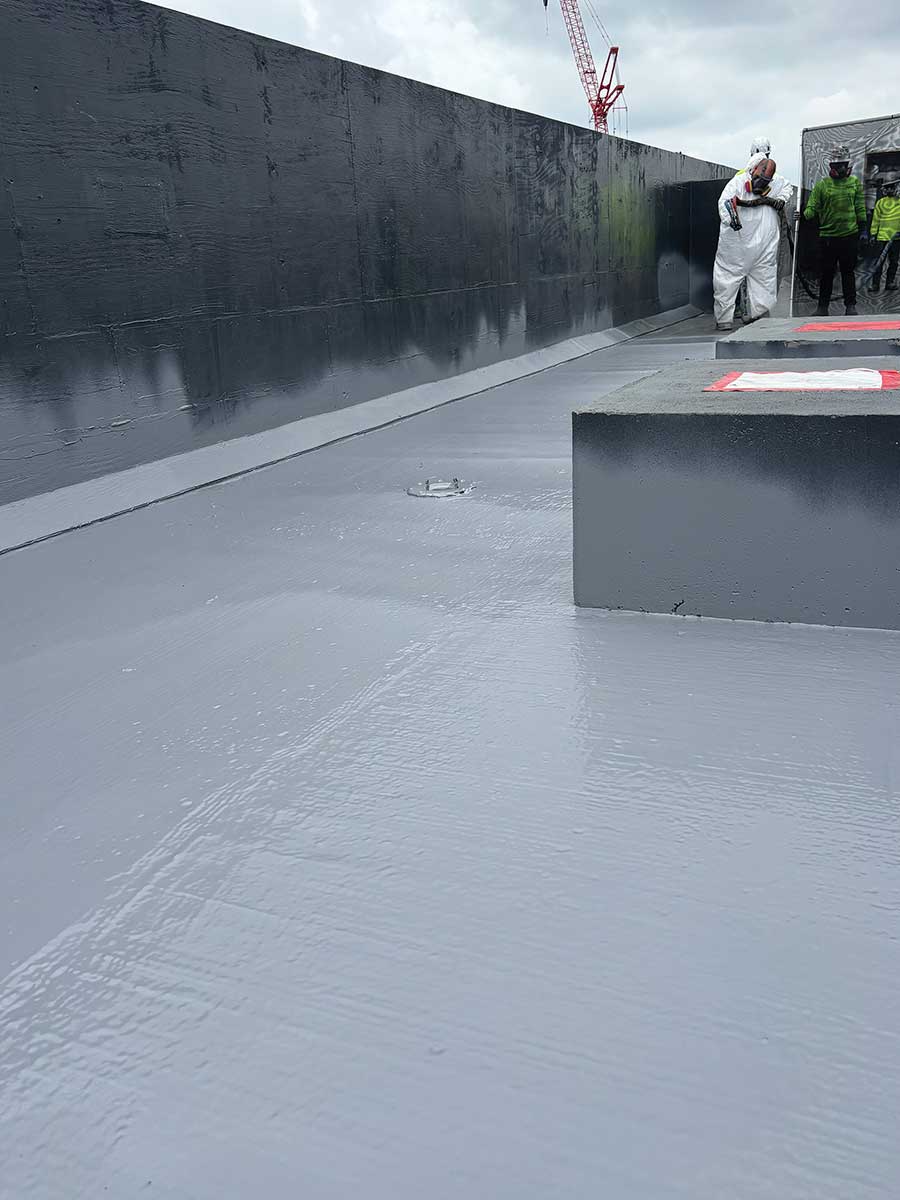
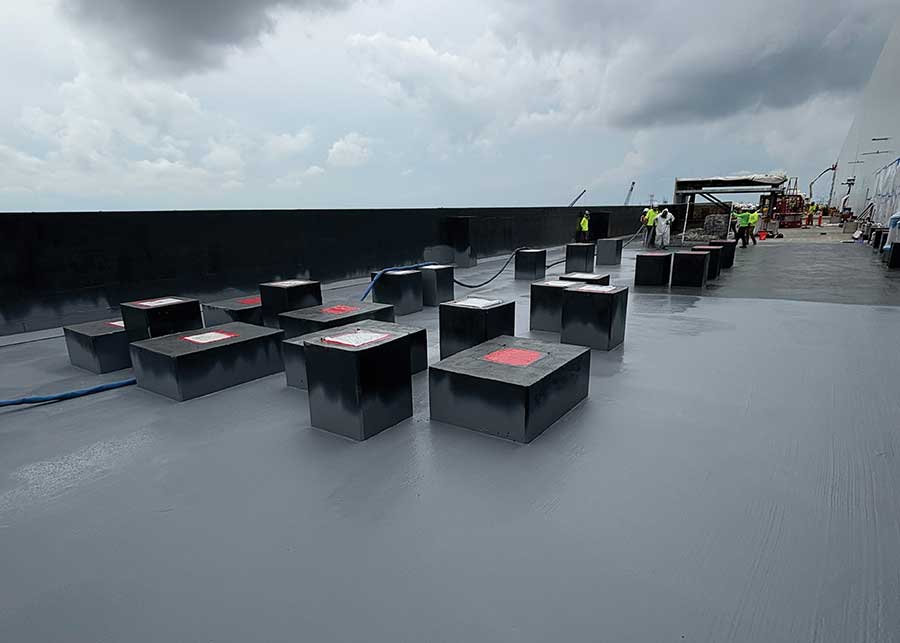
Spray-application of Polyglass Tecnocoat.
Maintenance and Lifecycle Performance
The maintenance requirements for polyurea systems depend largely on the application type. For a protected assembly with some type of overburden over the membrane, there should be no maintenance required.
For exposed applications, such as parking, pedestrian, or traffic-bearing applications, maintenance is typically limited to the wear coat rather than the waterproofing membrane itself.
“Generally, you still would be installing some type of aliphatic topcoat or wear coat over the aromatic polyurea,” Franciosi says. “And those systems do need some maintenance depending on the amount of traffic.”
In practice, maintenance for exposed areas typically focuses on refreshing the surface coating, while the underlying waterproofing layer is engineered for long-term performance. That may involve some recoating based on the overall wear and tear of the system and how much traffic it is exposed to. But that’s usually just for the wear coat. “The polyurea, which is the primary waterproofing of the system, generally can last for decades under the right conditions,” he says.
Additional Benefits
Polyurea systems offer some unique properties that make them particularly suited for specialized applications.
“One of the benefits of polyurea versus many other waterproofing technologies out there is that it also acts as a root barrier,” Franciosi points out. “So if you had a green roof or planter application with a polyurea system, you technically would not have to include other barrier products or systems to protect the waterproofing system from root damage.”
Chemical resistance is another standout feature. Most polyurea formulations have very good chemical resistance, which can be a big benefit versus some of the other sheet- and liquid-applied membranes.
“That’s why you often see polyurea being used in containment-type applications protecting areas from chemical spills and things along those lines,” he said. “That’s due to the robustness of the chemistry and its ability to resist many different types of chemical exposure.”
The Bottom Line
For waterproofing professionals looking to improve project timelines while delivering durable, long-lasting protection, polyurea coatings offer a solution.
The combination of seamless application, exceptional durability, fast cure times, and minimal maintenance requirements makes these systems particularly attractive for plaza decks, parking structures, and specialized applications requiring chemical resistance or root barrier properties.
“The key takeaway for polyurea is the high production application and the fast return to service, which usually translates to both cost and schedule savings,” Franciosi says. In the waterproofing industry, time is money, and durability is paramount.
Winter 2026 Back Issue
Price range: $4.95 through $5.95
World of Concrete Preview
Deep Foundation Waterproofing: Why a Holistic Approach Matters
Polyurea Coatings: A Fast-Curing Solution for Waterproofing Concrete Decks
Beyond 6-Mil Poly: The Case for Class A Vapor Barriers
Managing Shrinkage Cracks in HCA-Waterproofed Concrete Structures
Description
Description
World of Concrete Preview
Explore waterproofing-related businesses and educational sessions at World of Concrete.
Deep Foundation Waterproofing: Why a Holistic Approach Matters
By Lisa Semling
With limited above-grade space, developers are increasingly turning to subgrade levels to house essential functions such as parking, storage, healthcare facilities, retail, and data infrastructure. But, the deeper the foundation, the more intense the challenges.
Polyurea Coatings: A Fast-Curing Solution for Waterproofing Concrete Decks
By Vanessa Salvia
Polyurea coatings offer a combination of seamless application, superior durability, and remarkably fast cure times that are changing how waterproofing projects are specified and executed.
Beyond 6-Mil Poly: The Case for Class A Vapor Barriers
By Vanessa Salvia
Moisture intrusion through concrete slabs remains one of the most challenging issues for waterproofing professionals to remedy after construction.
Managing Shrinkage Cracks in HCA-Waterproofed Concrete Structures
By David Webster, PE, SE, Ph.D
This article examines how hydrophilic crystallizing admixtures (HCAs) used as waterproofing in concrete structures require careful crack width control, as demonstrated by a Seattle building case study where inadequate reinforcing led to cracks exceeding the HCA’s self-healing capacity.
Additional Info
Additional information
| Weight | N/A |
|---|---|
| Magazine Format | Digital Download Magazine, Print Mailed Magazine |