By Vanessa Salvia
Photos courtesy of Crawlspace Depot
Ahome’s crawlspace is easy to overlook. It’s out of sight and out of mind for most homeowners, who don’t normally choose to go in their crawlspace unless they really have to. But waterproofing professionals know that left untended to, a crawlspace can undermine a home’s safety, compromise air quality, and expose its occupants to a range of biological and chemical hazards.
Could It Be A Health Hazard?
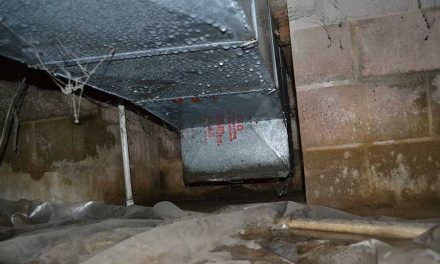
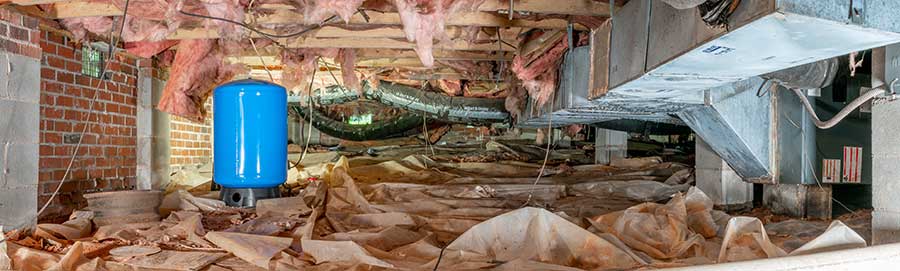
Moisture is the root cause of most crawl space problems. In many parts of the country, warm, moist air enters vented crawl spaces during the spring, summer, and fall and condenses on the cooler surfaces of walls, floors, and ductwork. This, combined with moisture migrating up from the soil and water seeping through foundation walls, creates conditions that are ideal for biological growth and structural damage.
According to Nikki Krueger, senior marketing director for Santa-Fe Dehumidifiers and AprilAire in Madison, Wisconsin, “60% relative humidity for 72 straight hours can create mold, mildew, and fungus problems,” she says. “At a relative humidity of 75%, wood floors will start to cup. Walls and ceilings will become stained. And at 85% relative humidity, wood starts to rot and paint begins to blister.”
In addition, fungi, bacteria, mold, spores, mycotoxins (toxic chemical products produced by fungi), endotoxins (a toxin that is present inside a bacterial cell), and microbial volatile organic compounds (mVOCs), which are often responsible for musty odors associated with mold, may also be present. That’s not all.
“Pests are actually believed to cause more structural damage to homes each year than fires and storms combined,” Krueger says. “Termites and wood-boring beetles thrive on moldy wood in damp crawlspaces with a moisture content of typically 20% or more. The estimated repair cost of subterranean termites in the United States can exceed $2 billion annually.”
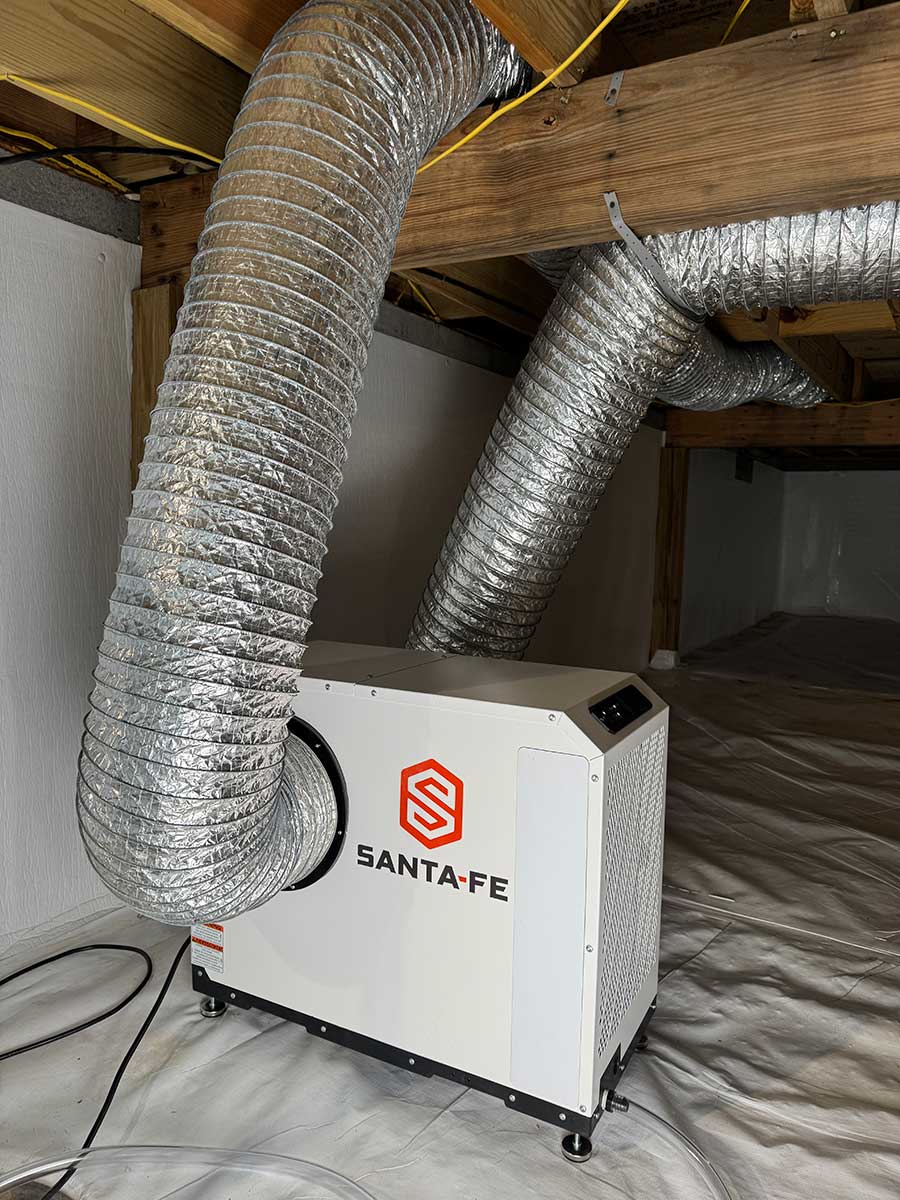
A Santa-Fe Advance Dry110 with Dual Exhaust unit installed in a basement crawlspace. Photos courtesy Santa-Fe Dehumidifiers & AprilAire
Erika Lacroix, owner of EZ Breathe Home Ventilation Systems, emphasizes that “the basement and crawl space air doesn’t stay there.” The stack effect draws air from below the home upward through the living space. Studies show that as much as 50% of the air in a home comes from these below-grade areas. A study of a Northern California residence (https://pubmed.ncbi.nlm.nih.gov/29665159) found that more than 70% of the airflow entering the living zone in the winter and at night during summer came through the crawlspace, rather than directly from outdoors.
Billy Tesh, president of Crawlspace Depot, puts it bluntly: “The indoor air quality in the house is improved when the crawlspace air is in better conditions and doesn’t have mold and mildew growing like a petri dish, like it is in a lot of crawl spaces.”
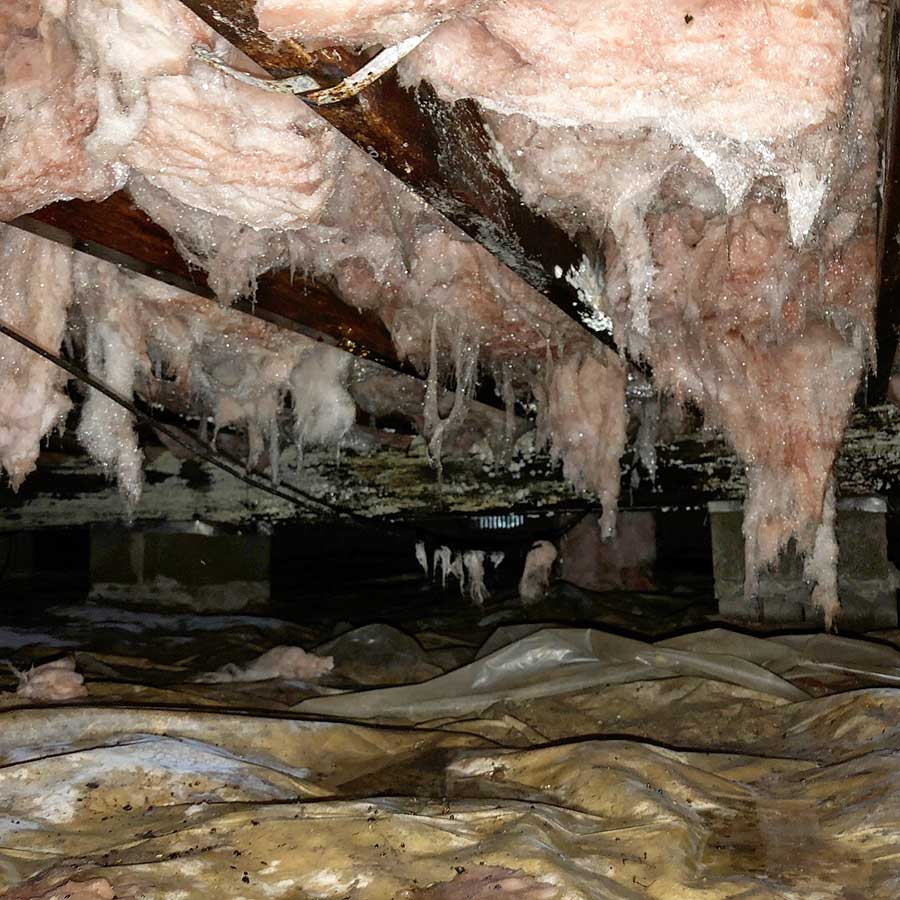
Photo by Matt Hargrove / Total Home Performance
Ryan McCoy, marketing manager at ISI Building Products, explains that radon migrating inward from the crawlspace can be an issue as well. Radon is a radioactive gas produced by naturally occurring compounds in soil, rock, and groundwater. “Up to 50% of the air occupants breathe can come from the crawl space,” McCoy says. “Even code-compliant crawlspaces can become major pathways for radon if control measures are not present.” That air carries not just radon, but dust, mold spores, and anything else that has accumulated in the crawlspace.
The Case for Encapsulation
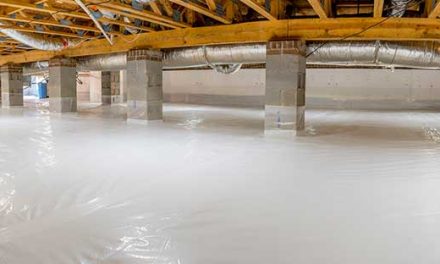
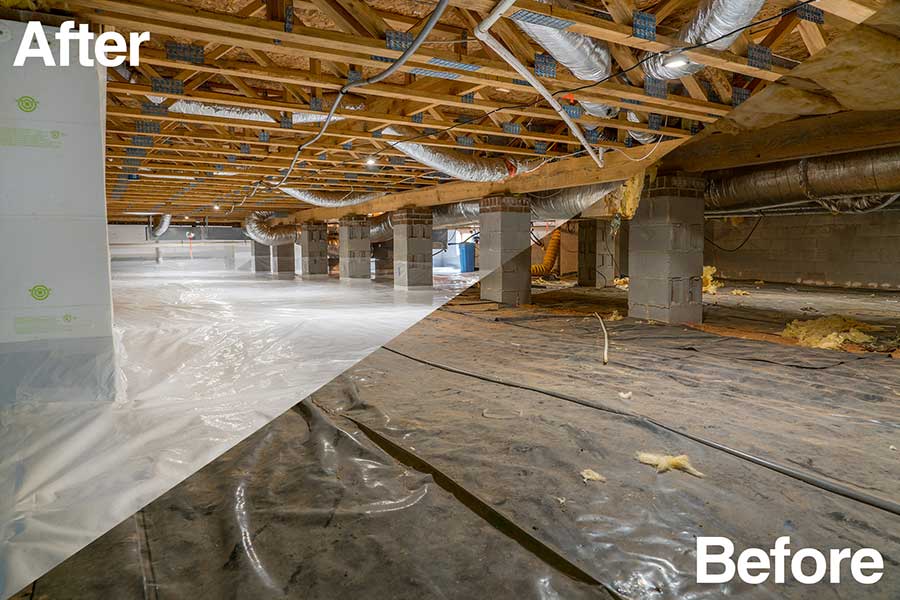
Building science experts agree that the most effective solution for crawlspace health is full encapsulation. This means converting a vented crawlspace into a sealed, conditioned environment. A vented crawlspace is, by definition, open to the outdoors and does not control airflow or vapor movement.
McCoy says the goal is “treating the crawl space less like it’s part of the outdoors and treating it more like part of the indoors, the same way you would if it was a basement or part of the living space.”
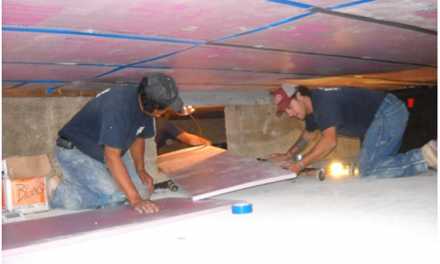
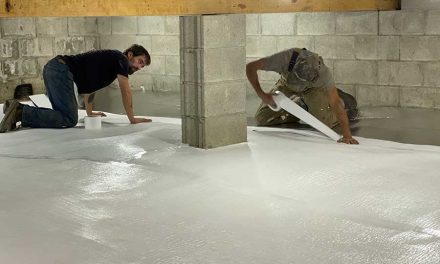
Exterior water management in a closed crawlspace prevents liquid water intrusion. Sealed walls minimize entry of humid outdoor air. Vapor barriers minimize evaporation from the ground or perimeter walls. Mechanical drying systems remove water vapor, and drains or pumps remove water if plumbing leaks or floods.
Much of the building science behind encapsulation stems from a peer-reviewed research project conducted by Advanced Energy of Raleigh, North Carolina. Tesh was part of that project. “That science was accepted in a lot of regional considerations for changing the building codes to allow for specific applications of closed crawlspaces and how they should be done,” Tesh says. “It was peer reviewed, and the Department of Energy and several other agencies provided funding to make sure that things were right,” Tesh says of the study.
Tesh also cautions that contractors need to follow the code. “We see in the marketplace individuals that don’t follow the code, and then that becomes a problem down the line for that homeowner,” he says.
Vapor Barriers
Not all vapor barriers are created equal. Marge Kaminski, sales manager for Emecole Metro, emphasizes understanding permeance rating. This measures how much vapor and gas can pass through the liner. A proper vapor barrier should be rated below 1 perm, which is the standard definition of a “zero perm” liner.
Lacroix says dirt floor crawl spaces in particular are the most concerning. “Dirt floor crawl spaces are one of the worst pollutants to a home,” she says. “A vapor barrier is the bare minimum.”
Aluminum-faced liners provide an additional layer of protection. “Studies with the aluminum show it’s decreasing not just water vapor coming through, but all of the soil gases,” Kaminski explains. Aluminum has the benefit of being more reflective than a mirror for heat, providing a higher reflective value than standard liners, regardless of which direction the foil faces. Research has also shown that aluminum acts as a deterrent to termites.
Kaminski says it’s important to run the vapor barrier all the way up to the top of the walls, not just to the floor’s edge or a few inches up. “If you simply go to the edge of the floor or up an inch or two on the wall, you still have the possibility of things coming through the wall itself,” she says.
On floor joists and overhead surfaces, the approach is different. Kaminski says a standard impermeable liner should not be applied directly to the joists. “You don’t want to trap moisture, mold, or anything in that area,” she says. Instead, she recommends a micro-perforated foil-backed liner, which still provides the reflective benefits of the foil while allowing moisture to escape. If a toilet overflows or the ice maker starts to leak, water won’t be trapped against the wood where it can start to rot and undermine the foundation.
Mechanical Conditioning
Encapsulation alone is not enough. Once a crawl space is sealed, building codes require a mechanical strategy to condition the space. Krueger says the 2021 International Residential Code offers several options, including continuous mechanical exhaust ventilation, conditioned air supply, and dehumidification. Of these, dehumidification is the only option that allows for accurate, ongoing control of relative humidity. “Only a dehumidifier provides the ability to set the conditions to a specific RH,” she says, and “this solution enables the crawl space to be as isolated as possible from the rest of the house.”
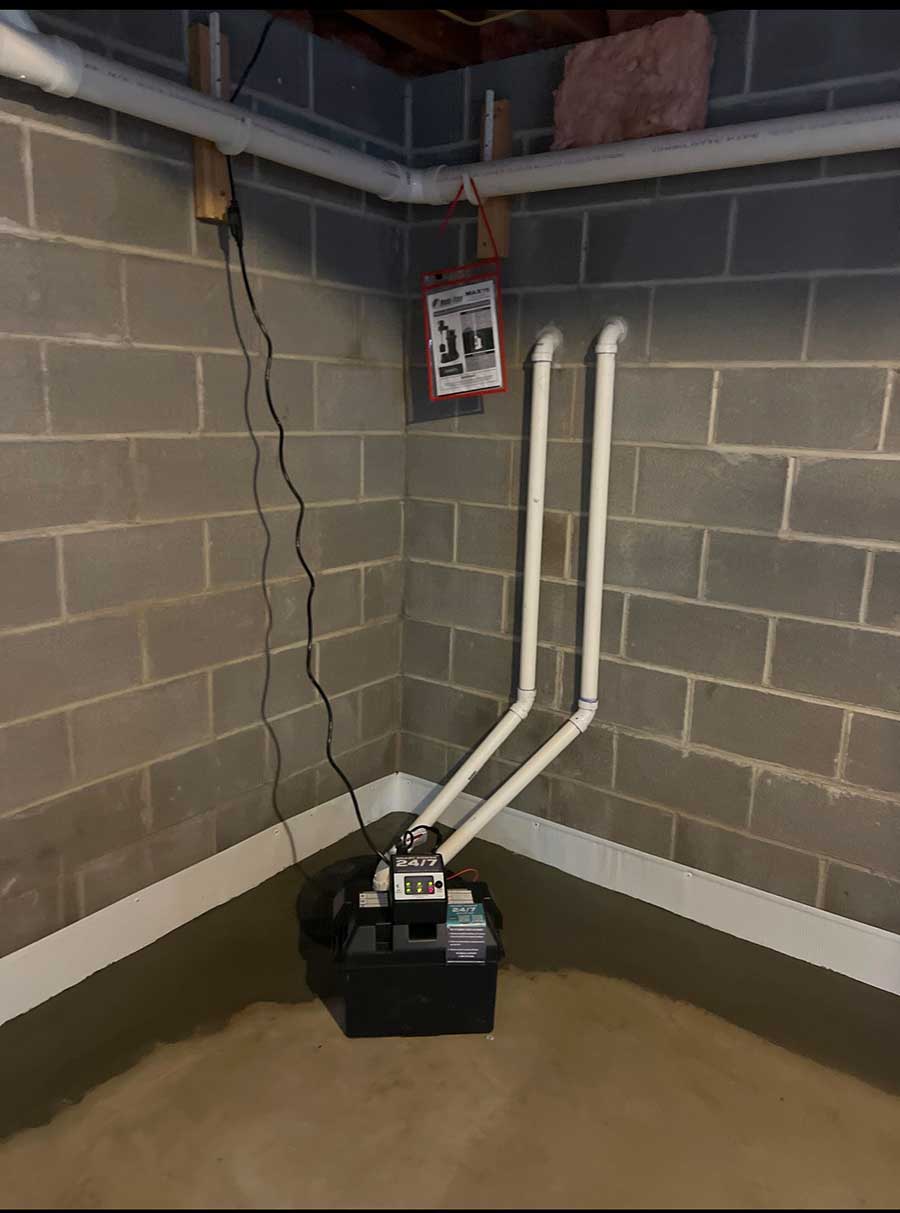
Ohio State Waterproofing Smart Power double pumping system with Wi-Fi monitoring allows for double the volume to exit during extreme weather. Photos courtesy of EZ Breathe
When it comes to selecting a unit, not all dehumidifiers are suitable for crawl space use. Big-box units often short-cycle, recirculating air only in the immediate area rather than treating the whole space, and many are not rated for the low-temperature, corrosive environments that crawl spaces present. Krueger advises looking for commercial-grade units with MERV-13 filtration. “Over six years, these premium filters can remove up to 2 pounds of dust, pollen, mold spores, and bacteria from the air in your crawl space,” she notes. Also look for dual-exhaust for whole-space air circulation, warranties of at least six years, and units that exceed Department of Energy energy efficiency requirements.
Mechanical crawl space ventilation is increasingly being written into building codes. Lacroix notes that Oregon is leading the charge, requiring mechanical ventilation in all new crawl space builds. “The Dakotas have a code on the books. New York has something similar where if you’re in the crawlspace doing an encapsulation job or waterproofing, and not just for new builds, you are required to employ mechanical ventilation as part of getting your license to do the job,” she says.
Ventilation systems like EZ Breathe and Emecole’s Fresh & Clean work by exhausting stale crawlspace air to the outside. Lacroix describes EZ Breathe’s approach as delivering conditioned air into the crawl space through a floor vent while exhausting bad air out the other side. The unit creates a slight negative draw that helps keep heated and cooled air in the living space longer. Kaminski describes the Fresh & Clean Gen 2 model as having “higher fan volume, digital humidistat, and all the bells and whistles,” reversing the flow that would otherwise draw contaminated crawlspace air upward into the living area.
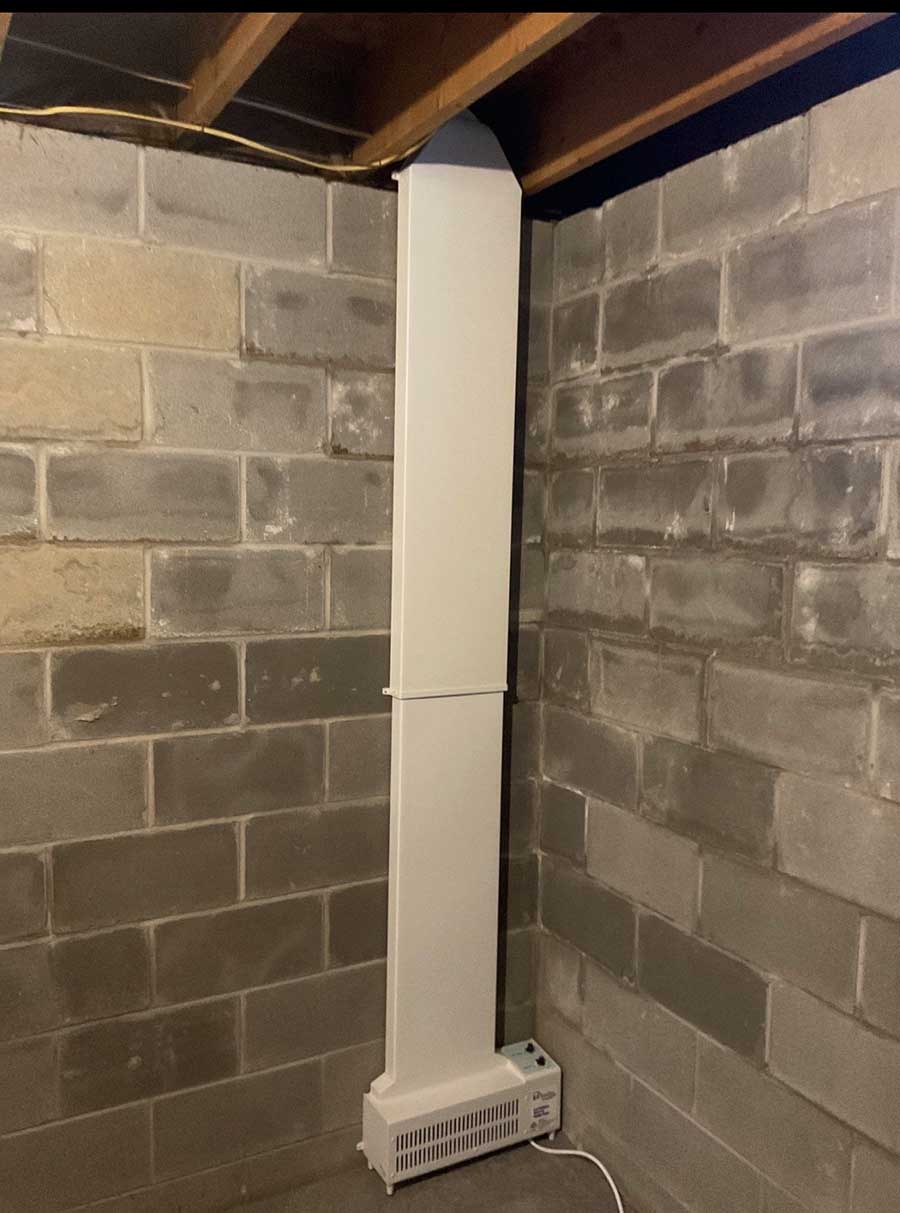
An EZ Breathe unit installed in a basement. The EZ Breathe unit provides air exchanges, odor reduction, pollutant removal, and dehumidification benefits to the basement environment.
Hazards to Assess
Before encapsulation work begins, professionals should assess the crawl space for pre-existing hazards that require remediation first. Two of the most significant are asbestos and radon.
Asbestos may be present in duct insulation or pipe insulation in older homes. It typically cannot be identified visually, so testing by a certified professional is required before work begins. McCoy recommends looking for a contractor certified through the Institute of Inspection, Cleaning and Restoration Certification who is equipped to take samples and handle asbestos and mold remediation.
Radon is another serious concern, particularly in unencapsulated crawl spaces with poor vapor barriers on the soil floor. Proper encapsulation can reduce radon levels significantly by blocking the primary pathway for soil gas entry. As McCoy notes, “a benefit of crawl space encapsulation with a proper barrier on the floor and the walls is you’re typically able to cut those radon levels down.”
Tesh also emphasizes that contractors working in crawlspaces need to be prepared for what they may encounter. “You should wear proper PPE when you’re working in these nasty environments,” he says. “That includes an N95 respirator.”
He adds that mold remediation in particular “needs to be done by someone that’s qualified and knows what they’re doing. It’s not just going in the crawlspace and spraying Clorox,” he says. “It’s understanding the science behind what you’re doing and making sure that you’re applying that science in the right way so that it is sustainable and effective.”
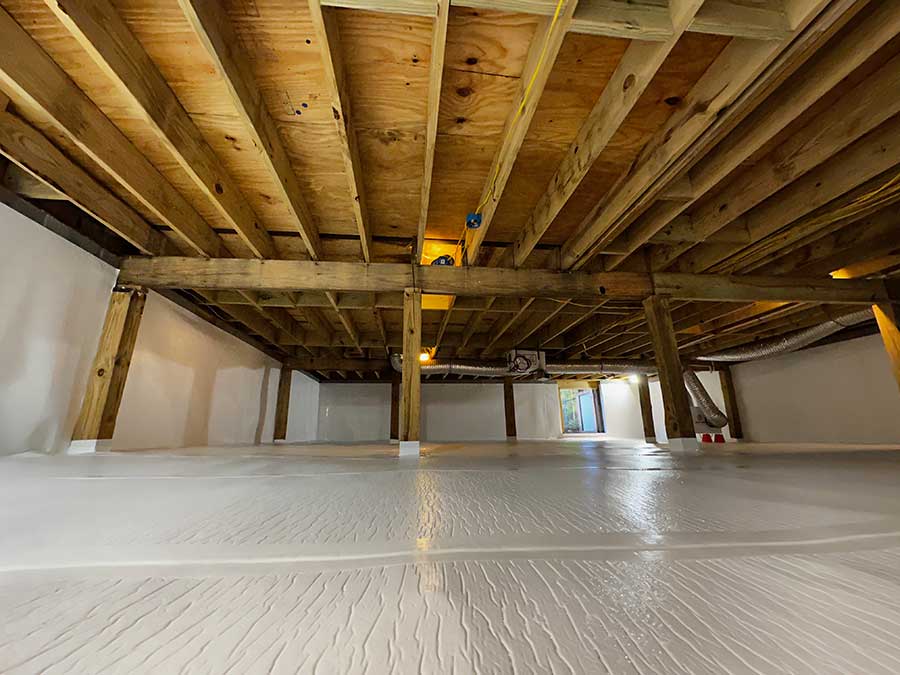
Completed crawl space encapsulation system. Photo courtesy of ISI Building Products
Lacroix also points to the structural risks of liquid water intrusion. “When you’ve got liquid bulk water, it starts to rot the foundation,” she says, warning of “dry rot, rust, molds, mildew, and soil gases. All these things that can actually threaten the integrity of the structure.” Left unchecked, she adds, homeowners face “replacing floorboards and reinforcing walls and cracking, crumbling foundation. Then you’ve got a much bigger issue on your hands.”
Tesh adds that drier conditions mean homeowners are “reducing pest pressure and reducing the likelihood of any wood rot, termites, or other wood-destroying insects in that crawl space.”
It’s also worth reminding clients that the chemicals used in termite treatments are a health concern in their own right, says Krueger. Keeping the crawlspace as isolated as possible from the rest of the home reduces occupant exposure to those treatments as well.
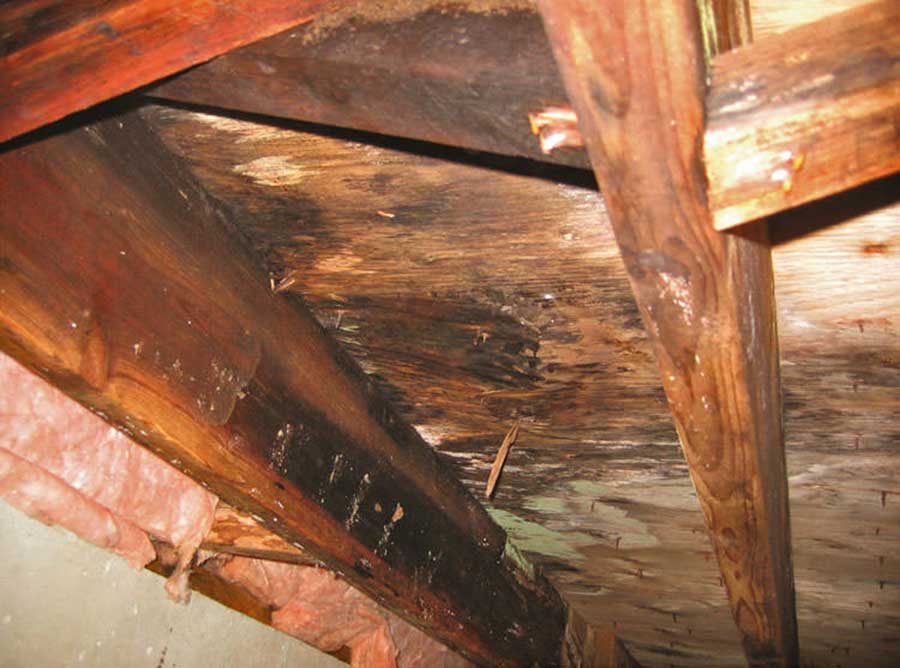
Structural degradation in crawl space due to moisture. Photo courtesy of ISI Building Products
What Homeowners Should Know to Ask
A homeowner who suspects a problem in their crawlspace may not know where to start. Professionals can help them understand what to look for. Biological growth on surfaces, sagging or deteriorating insulation, wood rot or structural movement, and musty odors in the living space are all physical indicators of a humidity problem.
“You can take a handheld humidity sensor down in that space and monitor it over the course of a couple of weeks,” says McCoy. “If you see that for a long period of time, that relative humidity is consistently above 70%, that is typically the condition that will lead to hazardous outcomes. Radon test kits are another way to determine if action should be taken.”
The Bottom Line
The science is clear, and the building codes are catching up. Tesh points out that when encapsulation is done properly, “there’s significant energy savings to the homeowner on their heating and air conditioning costs.” Drier conditions also reduce pest pressure and the likelihood of wood rot and termite damage, making it “overall a much, much better situation” for the homeowner.
A properly encapsulated crawl space protects the structural integrity of the home, reduces pest activity, improves indoor air quality, and cuts energy consumption. And to get the most from those benefits, pair the encapsulation with an appropriate mechanical conditioning system.
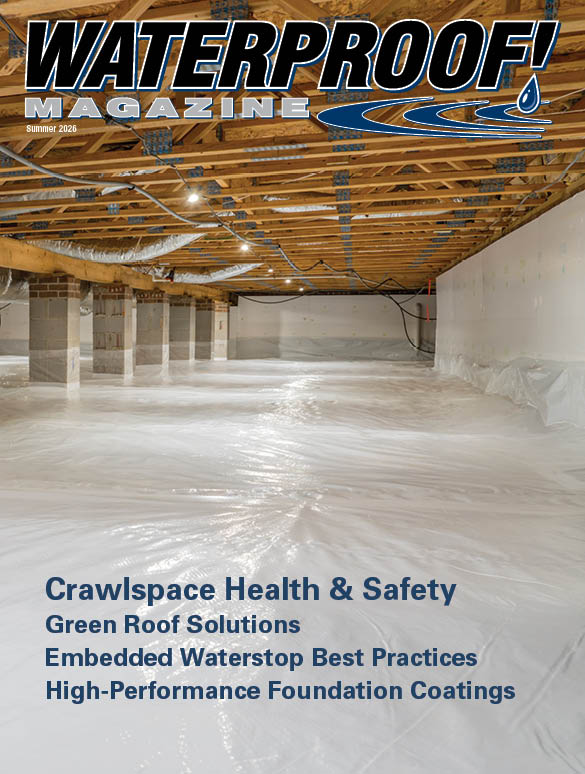
Summer 2026 Back Issue
Price range: $4.95 through $5.95
Embedded Waterstop Installation Best Practices for Durable, Watertight Concrete Joints
Crawlspace Health and Safety
High-Performance Foundation Coatings
Green Infrastructure Solutions for Today’s Rooftops
Description
Description
Embedded Waterstop Installation Best Practices for Durable, Watertight Concrete Joints
By David R. Poole
Waterstops are one of the most widely used methods for preventing water from passing through concrete construction joints. While the concept is straightforward, proper installation requires careful planning.
Crawlspace Health and Safety
By Vanessa Salvia
Left untended to, a crawlspace can undermine a home’s safety, compromise air quality, and expose its occupants to a range of biological and chemical hazards.
High-Performance Foundation Coatings
By Vanessa Salvia
Get foundation waterproofing wrong and it’s difficult if not impossible to remediate. Get it right and the building is protected for decades.
Green Infrastructure Solutions for Today’s Rooftops
By Vanessa Salvia
Roofs are no longer just protective surfaces. Now, they are considered key pieces of urban stormwater infrastructure.
Additional Info
Additional information
| Weight | N/A |
|---|---|
| Magazine Format | Digital Download Magazine, Print Mailed Magazine |