By Jonnie Hasan, P.E. (Vice President) Building Science & Business Development for IMETCO, M. Eng (Sustainable Smart Cities), M. Eng (Structural), BECxP, CxA+BE, and Wes Settlemyre, Commercial Channel Director for GMX, IIBEC, CSI, SWRI
Photos courtesy of IMETCO

Moisture-related enclosure failures in commercial buildings rarely stem from a single material deficiency. More often, they arise from incomplete coordination between air control, vapor control, and thermal control systems, particularly at transitions. This article examines enclosure integration through a building envelope consultant’s informed, risk-based lens grounded in current standards, codes, and field experience.
The Enclosure As A System
Modern commercial enclosures function as integrated environmental control systems. While air barriers, vapor retarders, and insulation are often specified independently, their performance is inseparable in service. Heat, air, and moisture transport are physically coupled, and the effectiveness of each control layer depends on how deliberately it is coordinated with the others.
From an enclosure consulting perspective, failures are most frequently observed at interfaces: roof-to-wall transitions, window perimeters, slab edges, penetrations, and expansion joints. These locations combine elevated pressure differentials, thermal discontinuities, and limited drying potential — conditions that amplify even minor coordination errors.
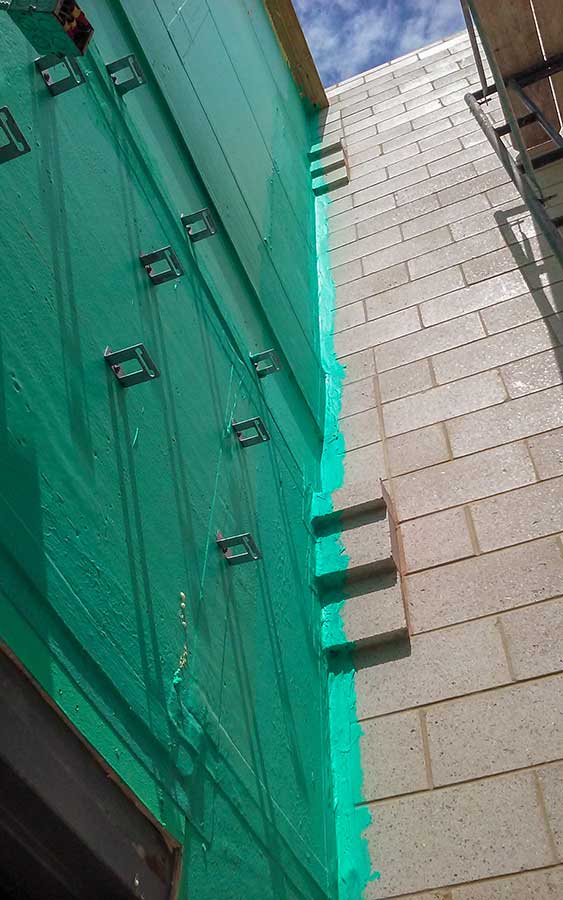
IntelliScreen Rainscreen System using IntelliWrap LVP AWB, and 2-inch rockwool insulation.
Governing Transport Mechanisms
Air movement and moisture risk
Moisture migrates through enclosures by diffusion and air transport. While diffusion can be significant in vapor-closed or high-humidity environments, air leakage typically represents the dominant moisture transport mechanism in commercial buildings.
Uncontrolled air movement driven by wind, stack effect, and mechanical pressurization can carry moisture deep into enclosure assemblies, bypassing diffusion control layers altogether. For this reason, discontinuities in the air barrier system are a primary contributor to condensation and moisture accumulation identified during forensic investigations. 2,3,6
Thermal control and the first condensing surface
Insulation continuity establishes the temperature profile across an enclosure assembly and governs the temperature of the first condensing surface — the plane most vulnerable to moisture accumulation.
Thermal bridging through steel framing, shelf angles, anchors, and fasteners can depress surface temperatures below interior dew point even where prescriptive insulation values are met. From an enclosure standpoint, condensation control depends less on nominal R-value and more on maintaining adequate temperature at critical planes.
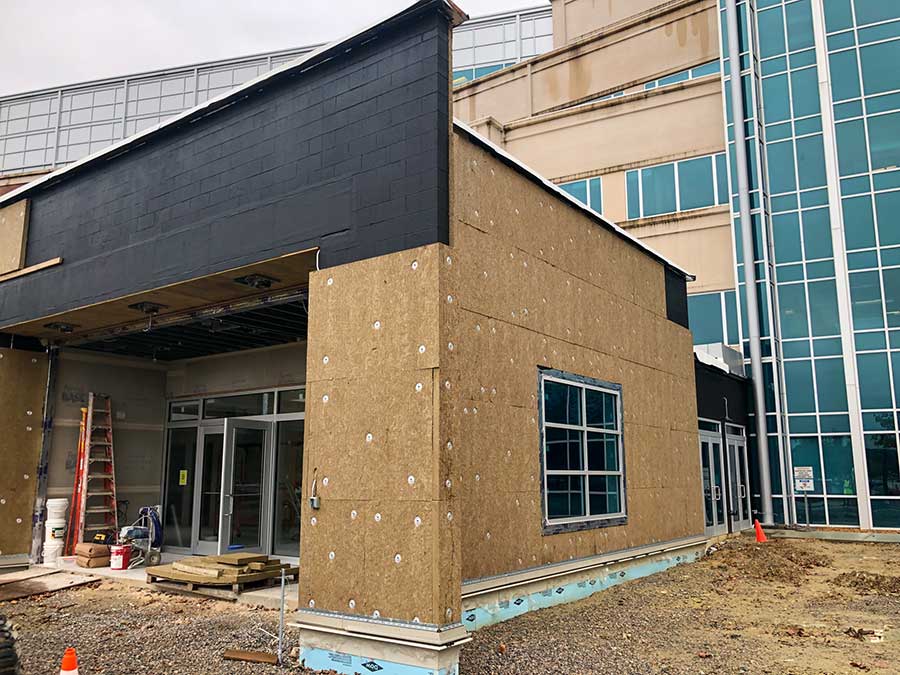
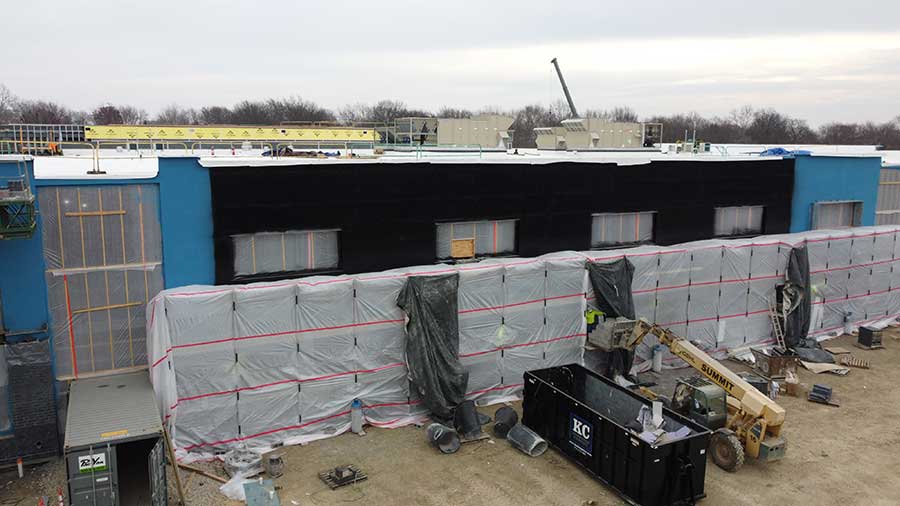
Air barrier and continuous insulation installation.
Vapor diffusion and drying potential
Vapor diffusion becomes a controlling mechanism when drying is restricted. Assemblies incorporating vapor-impermeable membranes, foil-faced insulation, metal claddings, or low-permeance interior finishes may have limited ability to dissipate incidental moisture.
ASHRAE Standard 160 provides a performance-based framework for evaluating moisture risk under these conditions and is commonly used in enclosure consulting to assess non-prescriptive assemblies and high-humidity occupancies.¹
Defining The Control Layers
Air barrier systems
An air barrier is defined by continuity across all enclosure interfaces, not by material selection alone.
- Air barrier materials are evaluated using ASTM E2178, which establishes air permeance under laboratory conditions.²
- Air barrier assemblies, including joints and penetrations, may be evaluated using ASTM E2357, which incorporates conditioning cycles representative of in-service stresses. ³
In practice, enclosure leakage is most often associated with transitions not represented in material testing.
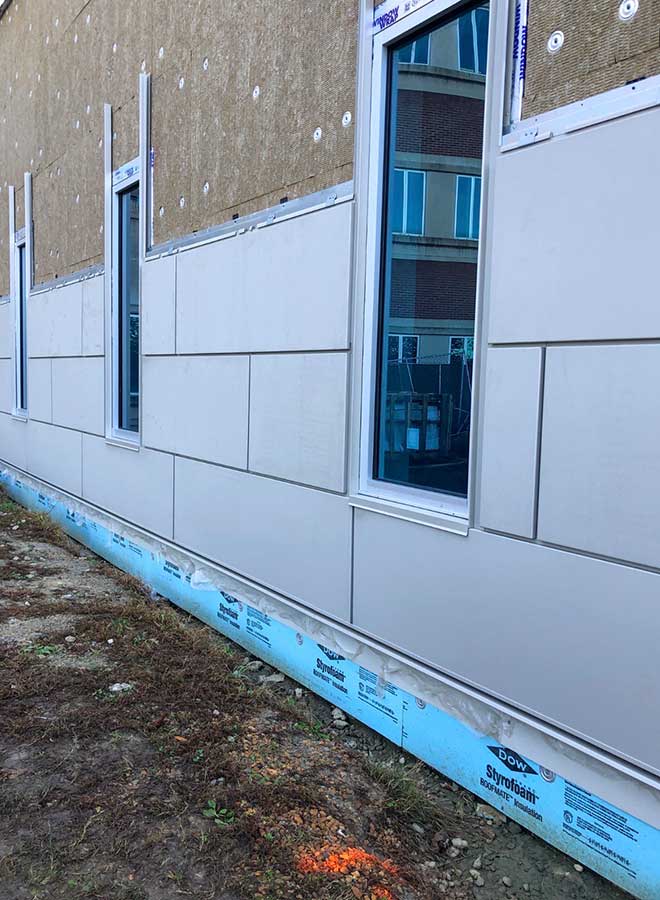
Vapor retarders
Vapor retarder performance is defined by water vapor permeance as measured by ASTM E96 / E96M.⁵
The 2024 International Building Code establishes vapor retarder requirements primarily for framed wall assemblies and permits compliance either prescriptively or through approved hygrothermal analysis.⁴
Imprecise use of “vapor barrier” terminology remains a frequent source of enclosure risk, particularly when multiple low-permeance layers are inadvertently combined.
Thermal insulation
Thermal insulation must be evaluated as a continuous system. In commercial enclosures, exterior continuous insulation often plays a decisive role in controlling condensing surface temperatures and mitigating the effects of thermal bridging.
The four enclosure control functions
A durable enclosure manages four primary control functions:
- bulk water control
- air control
- vapor control
- thermal control
These functions may be combined within individual materials or distributed across multiple components. Regardless of configuration, continuity across transitions governs performance. If the air control layer cannot be traced continuously around the conditioned volume, enclosure leakage should be anticipated.
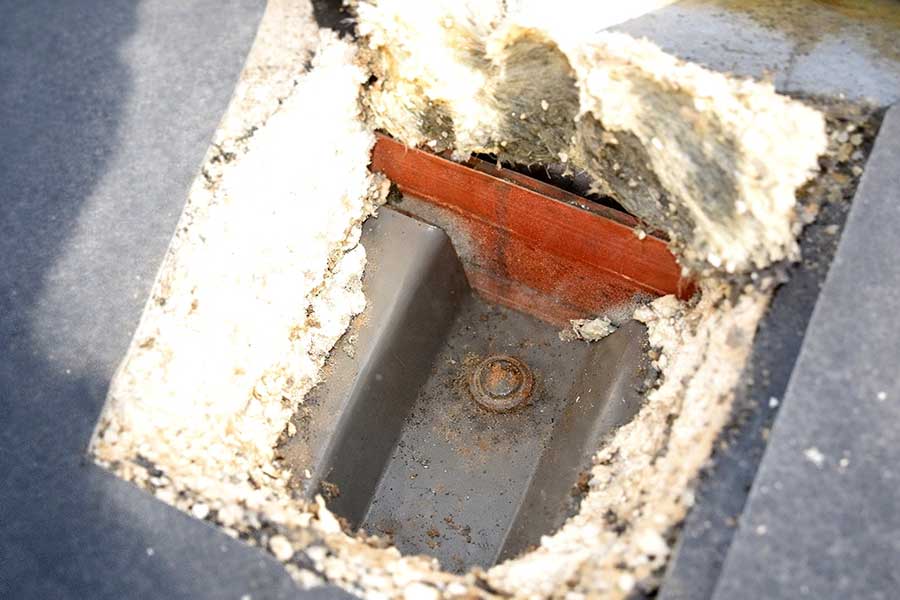
Roof-to-wall discontinuity with insulation and air barrier.
Integration In Common Commercial Assemblies
Mass wall assemblies
Concrete and CMU backup walls with exterior insulation typically exhibit favorable hygrothermal behavior when the air barrier is located on the exterior face of the structural backup and integrated with roof and opening transitions.
While mass walls can tolerate limited vapor diffusion, vapor-impermeable exterior layers may restrict outward drying.
Where such layers are used, drying potential should be evaluated under anticipated interior humidity conditions.¹
Steel-stud framed walls
Steel-stud framed assemblies prevent elevated condensation risk due to thermal bridging and reduced sheathing temperatures. Cavity insulation alone is generally insufficient to control condensation at the first condensing surface.
Effective assemblies typically incor-porate:
- a continuous air barrier at the sheathing plane
- exterior continuous insulation sized to control temperature
- vapor retarder strategies aligned with climate, interior humidity, and drying potential, supported by hygrothermal analysis where appropriate 1,4
A common deficiency observed in investigations is the presence of vapor-impermeable layers on both sides of the assembly, limiting drying in either direction.
Curtain wall systems
Curtain wall systems introduce coordination challenges due to divided responsibility among trades. Enclosure performance is governed largely by perimeter detailing and continuity with the primary air barrier plane.
Mock-up testing and explicit responsibility assignment are critical, particularly where combustible materials require verification of NFPA 285 compliance.⁷
Roof Assemblies and Critical Transitions
Low-slope roof assemblies rely on roof-to-wall transitions to maintain air barrier continuity. Conventional warm roofs typically rely on the deck plane for air control; vapor retarder requirements depend on climate and interior humidity.
Protected membrane and inverted roof assemblies place insulation above the waterproofing membrane, increasing sensitivity to construction moisture and material compatibility.
From an enclosure consulting standpoint, roof-to-wall interfaces should be detailed as primary air barrier connections rather than secondary flashing conditions.
Below-grade and Podium Interfaces
Below-grade waterproofing systems are not inherently airtight. Podium slabs, foundation walls, and grade transitions frequently interrupt air, water, and thermal control layers simultaneously.
Effective detailing requires explicit air barrier continuity, coordinated insulation strategies, and termination details that can be inspected. Where inspection is not feasible, risk mitigation through simplification or redundancy should be considered.
Vapor Retarder Strategy and Analysis
Commercial buildings often operate outside the assumptions embedded in prescriptive vapor retarder provisions. Interior pressurization, variable occupancy, and elevated humidity conditions can significantly alter moisture risk.
The 2024 IBC allowance for approved hygrothermal analysis provides a rational pathway for addressing these conditions.⁴ In the enclosure consulting practice, ASHRAE 160-based analysis is frequently used to evaluate non-standard assemblies and confirm acceptable moisture performance.¹
Transitions, Responsibility, and Verification
Most enclosure failures stem from coordination gaps rather than material deficiencies. High-risk interfaces include window perimeters, parapets, slab edges, penetrations, and movement joints.
Best practices include air barrier continuity diagrams, transition responsibility matrices, representative enclosure mock-ups, and inspection and testing protocols aligned with applicable standards and energy codes.6
While ASTM E2178 and E2357 provide useful performance benchmarks, field verification and corrective action remain essential to achieving intended enclosure performance.2,3
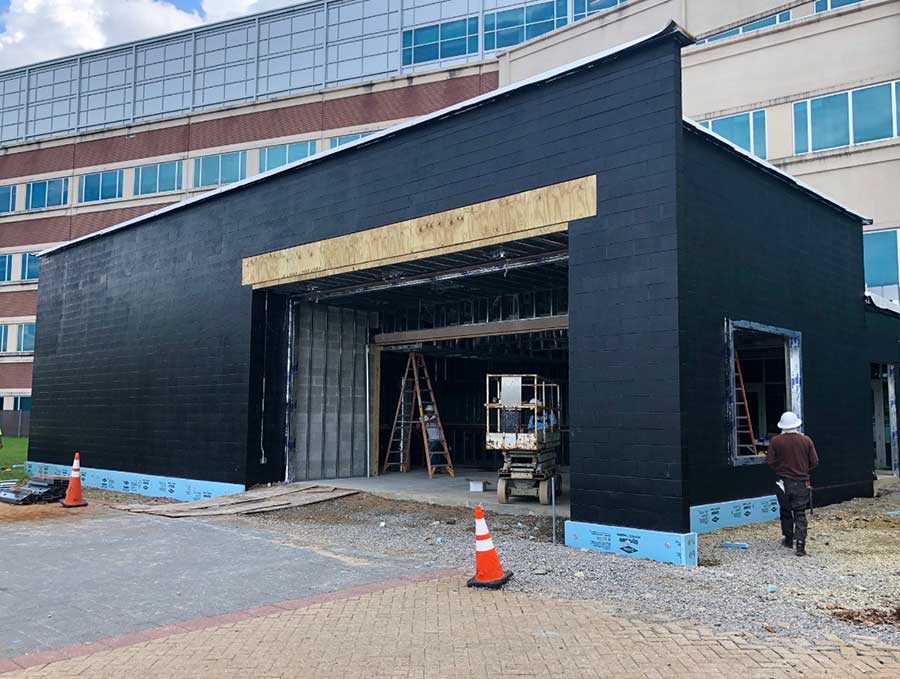
Continuity between roof-to-wall air barrier.
Conclusion
Durable commercial enclosures result from coordinated systems rather than individual materials. Aligning air barriers, vapor retarders, and insulation, particularly at transitions, reduces moisture risk, improves durability, and supports long-term performance objectives. As codes and standards increasingly emphasize measurable enclosure performance, integrated enclosure consulting will remain central to successful project outcomes.
1ASHRAE Standard 160 (2021), Criteria for Moisture-Control Design Analysis in Buildings.
2 ASTM E2178, Air Leakage Rate and Air Permeance of Building Materials.
3 ASTM E2357, Air Leakage Rate of Air Barrier Assemblies.
4 2024 International Building Code, Section 1404.3.
5 ASTM E96 / E96M, Water Vapor Transmission of Materials.
6 2024 IECC Commercial Air barrier provisions.
7 NFPA 285, Fire Propagation Characteristics of Exterior Wall Assemblies.
Spring 2026 Back Issue
Price range: $4.95 through $5.95
Advanced Roof Membrane Systems and Extreme-Weather Resilience
Basement Moisture Control Technologies:Smart monitoring systems, automated dehumidification, and IAQ management
Integrating the Control Layers: Coordinating Air Barriers, Vapor Retarders, and Insulation in Commercial Enclosures
Marine Waterproofing: Turning the Tide with Durable Concrete
Description
Description
Advanced Roof Membrane Systems and Extreme-Weather Resilience
By Vanessa Salvia
The three dominant membrane types are TPO, EPDM, and PVC, and each carry their own legacy while also continuing to evolve. Increasingly, though, the best option isn’t a single membrane but a hybrid assembly.
Basement Moisture Control Technologies:Smart monitoring systems, automated dehumidification, and IAQ management
By Vanessa Salvia
Basements are easy to ignore … until they’re not. Tools available today make it possible to manage basement air quality continuously, without requiring homeowners to pay constant attention.
Integrating the Control Layers: Coordinating Air Barriers, Vapor Retarders, and Insulation in Commercial Enclosures
By Jonnie Hasan and Wes Settlemyre
Most commercial envelope failures happen at the seams, not the surfaces — and fixing that requires systems thinking, not better products.
Marine Waterproofing: Turning the Tide with Durable Concrete
By Vanessa Salvia
The ocean has always been a hostile place for concrete. Seawalls, dry docks, piers, and bulkheads that once seemed permanent are showing their age, and their vulnerabilities.
Additional Info
Additional information
| Weight | N/A |
|---|---|
| Magazine Format | Digital Download Magazine, Print Mailed Magazine |