By Lisa Semling, GCP
Photos courtesy of GCP
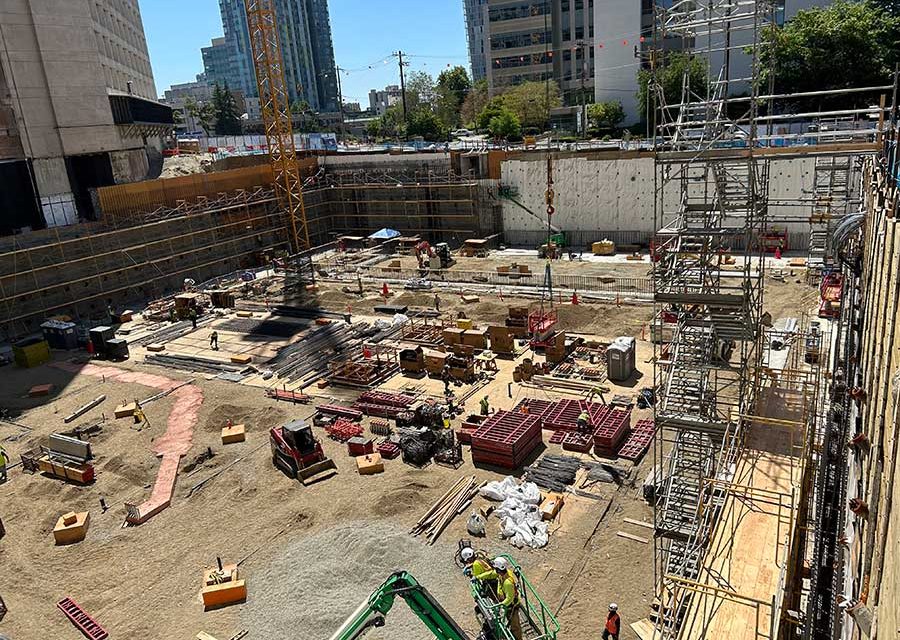
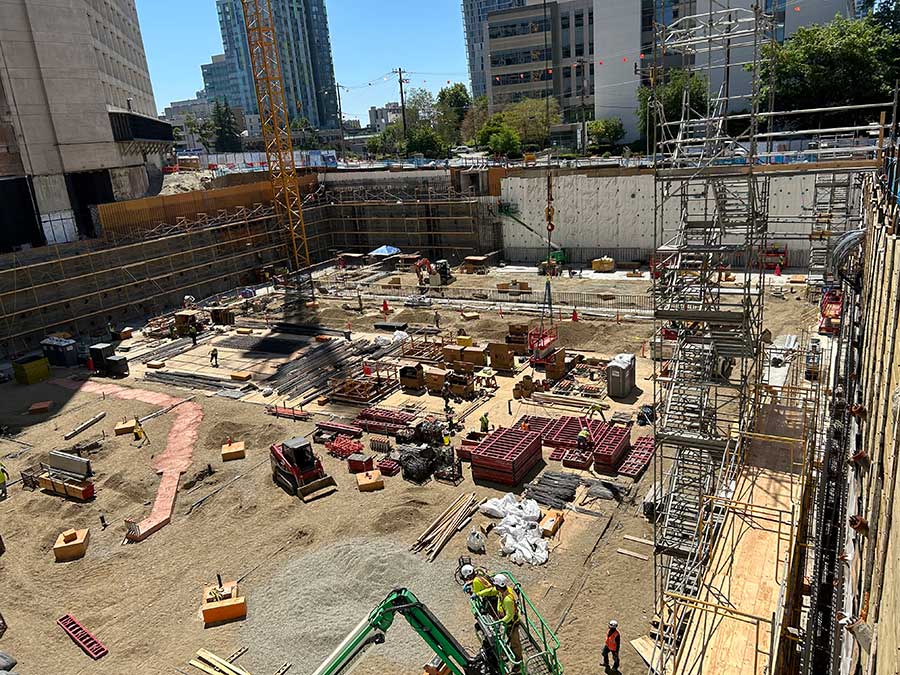
Below-grade waterproofing underway at Providence Swedish Hospital in Seattle.
Urban density, soaring property values, and the demand for mixed-use developments are driving construction teams to dig deeper than ever before. With limited above-grade space, developers are increasingly turning to subgrade levels to house essential functions such as parking, storage, healthcare facilities, retail, and data infrastructure. At the same time, engineering demands, from poor soil conditions to higher structural loads, are also dictating the need for deeper foundations.
While these foundations maximize usable space and structural stability, they present a new layer of complexity: protecting against persistent and often aggressive water infiltration. The deeper the foundation, the more intense the challenges.
Deep Foundation Waterproofing Challenges
Deep foundations face a unique convergence of environmental stresses that distinguish them from above-grade applications.
The combination of extreme hydrostatic forces, aggressive chemical exposure, and logistical constraints during construction creates conditions where conventional waterproofing methods often fall short.
Hydrostatic Pressure
As depth increases, so does hydrostatic pressure. Groundwater exerts immense force on foundation walls, seeking out even the smallest crack or void. Without comprehensive protection, water ingress can quickly compromise interior spaces.
Corrosive Groundwater
Deep excavation often exposes structures to groundwater containing sulfates, chlorides, and other corrosive elements. These chemical conditions accelerate concrete degradation unless barriers are specifically engineered to withstand them.
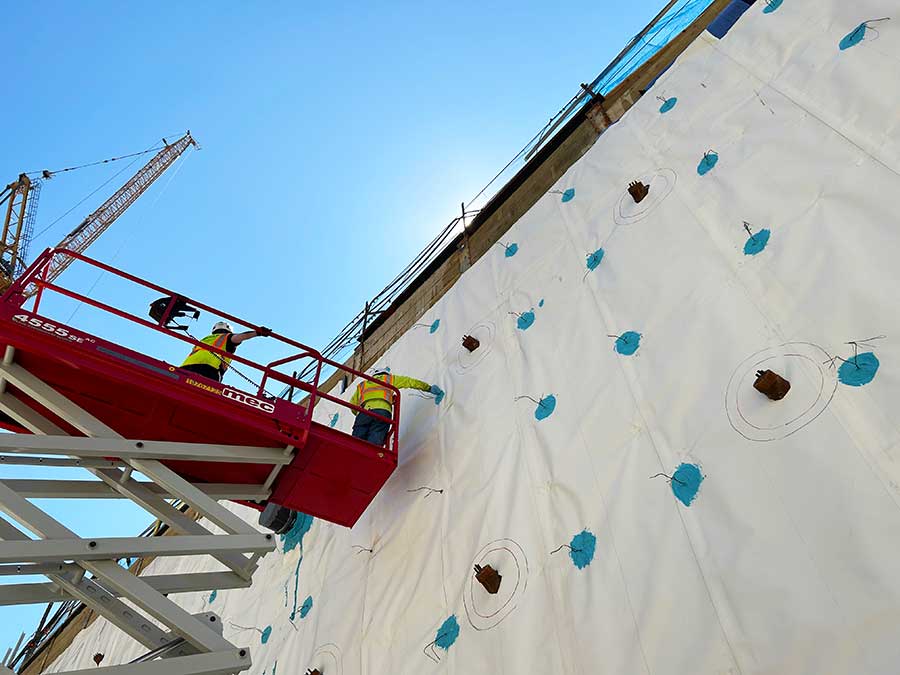
PrePrufe Liquid Flashing quickly and efficiently seals penetrations.
Dewatering Demands
Beyond 5 to 10 feet, dewatering is often required to keep excavation sites dry. Continuous pumping is costly, time-intensive, and environmentally taxing. Reliable waterproofing systems that can be applied in damp conditions help reduce reliance on prolonged dewatering and allow construction schedules to stay on track.
Each of these challenges underscores a larger truth: Waterproofing cannot be treated as an isolated material choice. Instead, it requires a holistic approach that begins at design and carries through installation and long-term performance.
Moving Beyond Products
A piecemeal approach to waterproofing by specifying multiple manufacturers or addressing below-grade and above-grade systems separately introduces unnecessary risk. Gaps between systems, compatibility conflicts, and fragmented warranty coverage often lead to failures at the most vulnerable transitions.
PrePrufe Waterproofing System formed a fully bonded barrier against water ingress and lateral migration.
A holistic approach integrates waterproofing as a continuous system. It emphasizes:
- Continuity across all six sides of the structure, from foundation slabs and vertical walls to tie-ins with above-grade envelopes.
- Compatibility at transitions, ensuring materials and detailing function as one system, not disjointed components.
- Collaboration across stakeholders involving architects, contractors, consultants, and manufacturers early in design to resolve complexity before it reaches the field.
- Single-source accountability simplifies warranty coverage, reduces conflict, and eliminates ambiguity if issues arise.
By treating waterproofing as a system and not a product, projects gain resilience, efficiency, and long-term durability.
Selecting a Resilient Waterproofing Solution
When evaluating waterproofing options, several critical factors should guide the decision.
Water Ingress Protection: The system’s ability to prevent water from penetrating the structure remains paramount.
Installation Performance: Equally important is that teams need solutions that install quickly and reliably while offering flexibility to adapt to project schedules.
System Detailing: Seams, penetrations, and tie-ins deserve particular scrutiny, as these junctions represent the most common failure points.
Balanced Capabilities: The ideal solution delivers balanced capabilities, providing strong performance across all aspects of the project without trade-offs that compromise durability.
Sustainability and Longevity: Finally, sustainability and longevity ensure the system performs under site-specific conditions for years to come, protecting the investment over the structure’s entire lifespan.
A thorough assessment of these criteria, aligned with the scale and risk profile of the project, is essential to ensure safety, reduce long-term costs, and deliver superior outcomes. Because the evaluation process can be complex, partnering with a manufacturer that provides end-to-end support, from early design consultation through on-site assistance, can streamline decision-making and provide greater assurance.
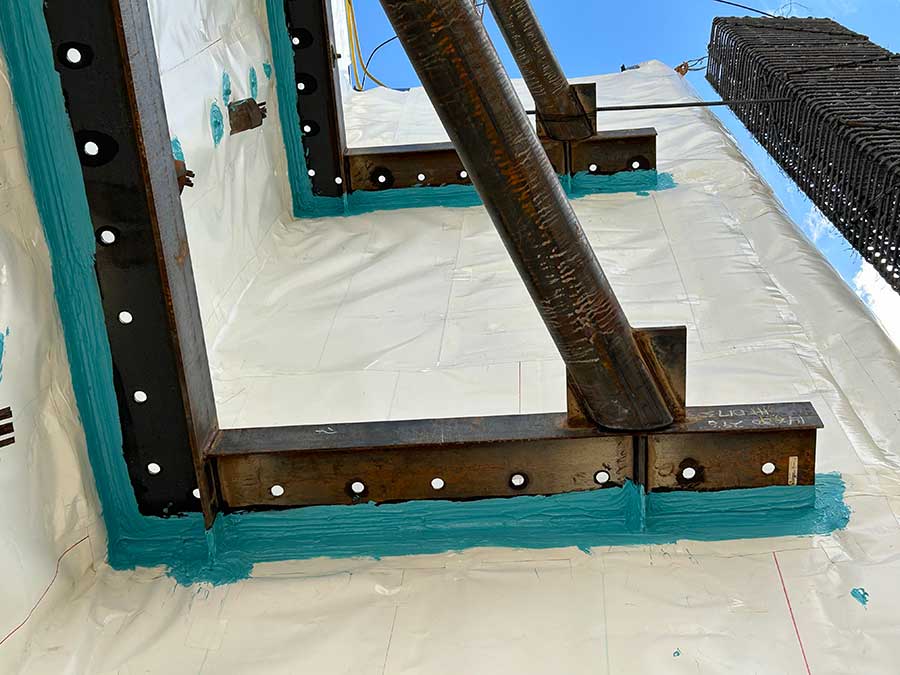
PrePrufe Waterproofing System formed a fully bonded barrier against water ingress and lateral migration.
Case Study: Providence Swedish North Tower, Seattle
The Providence Swedish North Tower, a 12-story acute care hospital expansion in Seattle, illustrates the power of this holistic approach. With 60,000 square feet of vertical waterproofing and below-grade tunnels connecting future facilities, the project demanded airtight and watertight performance.
Challenges:
- Tying below-grade membranes into hot rubber waterproofing and above-grade air barriers without gaps.
- Zero tolerance for water ingress in a mission-critical healthcare facility.
- Strict schedule and performance requirements, leaving no margin for installation error.
- A fragmented specification with multiple manufacturers, creating potential for compatibility and warranty conflicts.
Holistic Solution:
The project team, led by Mortenson and supported by Inland Waterproofing, Perkins & Will, RDH Building Science, and GCP, shifted to a single-manufacturer solution.
GCP’s 6Sides+ system provided integrated waterproofing and air barrier protection, ensuring continuity from foundation to façade.
- Below-Grade Protection: PrePrufe Waterproofing System formed a fully bonded barrier against water ingress and lateral migration.
- Detailing Continuity: PrePrufe Liquid Flashing sealed penetrations and transitions, accelerating installation and enhancing durability.
- Above-Grade Integration: Perm-A-Barrier Air Barrier Systems tied seamlessly into the below-grade system, preventing the compatibility issues common with multi-manufacturer specifications.

Workers preparing for the concrete pour at Providence Swedish Hospital in Seattle.
The result was one coordinated system, one warranty, and a structure protected against both water and air infiltration.
The holistic approach reduced installation risk, simplified project management, and ensured long-term durability for a critical healthcare facility.
The Future of Deep Foundation Protection
As construction continues to push downward, whether for hospitals, data centers, residential towers, or sports arenas, the risks of inadequate waterproofing multiply. Failures at depth are not easily corrected; they are costly, disruptive, and potentially catastrophic.
Adopting a holistic approach to waterproofing is not only best practice, it is mission-critical. By integrating systems, engaging stakeholders early, and choosing proven solutions designed to function together, developers and contractors can protect both their structures and their investments.
Lisa Semling
Lisa Semling is the Below Grade Segment Manager for GCP, a Saint-Gobain company. Over the past seven years, Lisa has worked across multiple branches of Saint-Gobain, from distribution to manufacturing, bringing a broad perspective to the construction solutions industry.
Summer 2018 Back Issue
$4.95
Livable Basements
AVAILABLE AS DIGITAL DOWNLOAD ONLY
Description
Description
Additional Info
Additional information
| Magazine Format | Digital Download Magazine, Print Mailed Magazine |
|---|
Related products